


Efficient processes and procedures are super important for any business to run smoothly. They give structure, consistency, and clarity, which helps employees do their jobs well and contribute to the business’ overall success. But hey, it’s not always easy to put these processes and procedures in place.
To make sure you implement them successfully, you’ve got to plan carefully and execute well. In this article, I’ll give you some tried-and-true strategies that can help you integrate everything smoothly and get the best results for your business.
When you understand and use these strategies, you’ll be able to tackle the challenges that come with implementing processes and procedures. My goal here is to give you some valuable insights and practical advice on how to do it effectively in your organization. So, let’s get started!
Article Outline
Understanding the Importance of Processes and Procedures
Processes and procedures are like the backbone of an organization’s operations. They give us a systematic and structured way of doing things, like tasks, activities, and workflows.
Knowing how important processes and procedures are is crucial for your business. It helps us recognize their value and understand how they impact our overall performance.
Let’s talk about some of the awesome benefits they bring:
Streamline Operations
Processes and procedures act as a roadmap for us. They give us clear instructions and guidelines to follow, step by step. This makes it easier for employees to do their work effectively and efficiently. When everyone is on the same page, tasks are performed consistently, errors are reduced, and quality goes up.
Reduce Errors
Consistency is the key to delivering reliable products or services. When we have processes and procedures in place, we can achieve a high level of consistency in our operations. Customers and stakeholders can trust us to consistently deliver what they expect from us.
Increase Efficiency
Efficiency is a big deal. Well-designed processes and procedures help us streamline our workflows, get rid of unnecessary steps, and make the best use of our resources. When we standardize and optimize our processes, we cut down on waste, save costs, and boost productivity.
Improve Customer Satisfaction
Our customers matter, right? When we perform tasks consistently and efficiently, our customers benefit from a reliable and smooth experience. Happy customers mean increased loyalty, positive word-of-mouth referrals, and a competitive edge in the market.
Foster Continuous Improvement
Here’s the cool part: Processes and procedures give us a foundation for continuous improvement. We can document and analyze our existing processes to find areas where we can make them even better. By adapting to changing business needs, incorporating best practices, and staying ahead of the game, we can remain competitive in a dynamic marketplace.
So, the bottom line, processes, and procedures are the key to success for your business. They give us structure, efficiency, customer satisfaction, and a path to continuous improvement. By implementing and improving our processes, we can achieve operational excellence and keep up with the competition.
Strategies for Effective Implementation of Processes and Procedures
Alright, now that we understand how important it is to implement processes and procedures effectively, let’s dive into some strategies that can help you achieve success.
Assessing Your Business’s Needs
Before you go ahead and implement new processes and procedures, it’s crucial to take a good look at your business needs. This means conducting a thorough assessment to understand where you currently stand and identify areas that need improvement. This assessment forms the basis for developing tailored strategies for effective implementation.
Here’s what you can do:
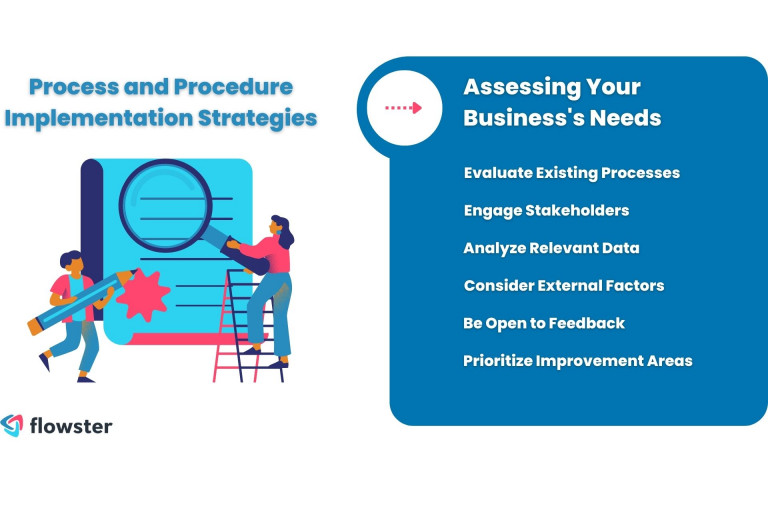
Evaluate Existing Processes
Start by evaluating the processes and procedures you already have in place. Figure out their strengths and weaknesses and whether they align with your business goals. Look at factors like efficiency, effectiveness, scalability, and adaptability.
Engage Stakeholders
Get input from stakeholders across different levels of the organization, like employees, managers, and executives. They have valuable insights into the challenges and issues faced in carrying out tasks. Conduct interviews, surveys, and workshops to gather their feedback.
Analyze Relevant Data
Take a close look at relevant data and metrics. Review performance indicators such as productivity levels, turnaround times, error rates, and customer satisfaction scores. This data gives you quantitative insights into areas that need improvement and helps you prioritize the implementation of new processes and procedures.
Consider External Factors
Don’t forget to consider external factors that might impact your business needs. This includes changes in regulations, technological advancements, market trends, and customer expectations. Assess how these factors may require changes or improvements in your processes and procedures to stay competitive and meet evolving demands.
Be Open to Feedback
Throughout the assessment, be open to feedback and listen to your employees’ concerns and suggestions. Foster a culture of transparency and collaboration where people feel comfortable sharing their perspectives. This builds a sense of ownership and engagement during the implementation process.
Prioritize Improvement Areas
Based on your assessment findings, prioritize the areas that need immediate attention. Identify specific goals and objectives you want to achieve through the implementation of new processes and procedures. This will guide your efforts and ensure that the implementation process targets the most critical needs of your business.
In a nutshell, assessing your organization’s needs is a crucial step in implementing effective processes and procedures. By evaluating existing processes, engaging stakeholders, analyzing data, considering external factors, and prioritizing improvement areas, you can develop a clear roadmap for successful implementation. This assessment forms the foundation for tailoring strategies that align with your business’s unique requirements and drive positive outcomes.
Setting Clear Goals and Objectives
Setting clear goals and objectives is super important when it comes to successfully implementing new processes and procedures in your organization. Having clear goals gives you direction and purpose. They guide your implementation efforts and help you measure progress and success.
Here’s what you can do:
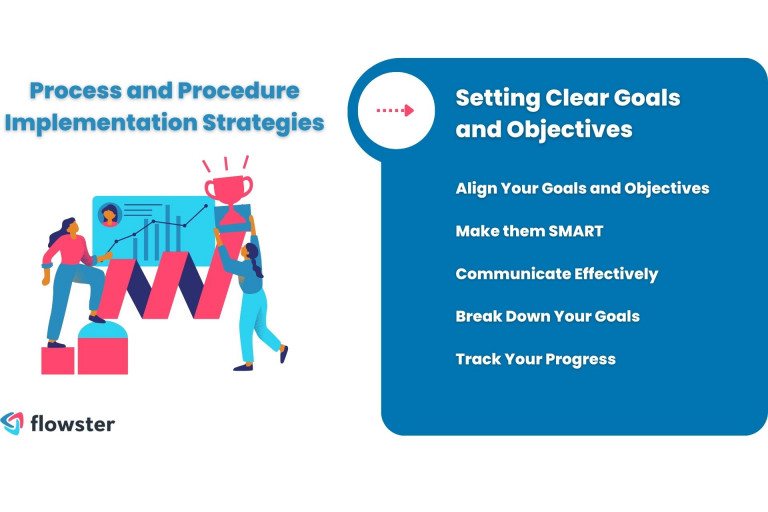
Align Your Goals and Objectives
Start by aligning your goals and objectives with the overall strategic vision of your business. Understand the long-term objectives and desired outcomes that your business wants to achieve. This alignment ensures that the implementation of new processes and procedures directly contributes to the organization’s overarching goals.
Make them SMART
When setting goals, make sure they are specific, measurable, attainable, relevant, and time-bound (SMART). Specific goals give you clarity and focus on what needs to be done.
Measurable goals allow you to track progress and evaluate success. Attainable goals are realistic and within reach. Relevant goals align with your organization’s needs and priorities. Time-bound goals have a set timeframe for completion, creating urgency and accountability.
For example, a specific and measurable goal could be to reduce customer service response time by 20% within six months. This goal is attainable and relevant to improving customer satisfaction, aligns with the business’ focus on exceptional customer service, and has a clear deadline for achievement.
Communicate Effectively
Make sure to communicate your goals effectively to all stakeholders involved in the implementation process, including employees, managers, and executives. Clear communication helps everyone understand the goals, gain buy-in, and feel a sense of ownership and commitment.
Break Down Your Goals
Break down your goals into smaller, manageable objectives. This allows for a step-by-step approach and ensures that progress can be measured along the way. Each objective should be specific, actionable, and aligned with the overall goal. Assign responsibilities to individuals or teams for each objective to ensure accountability and a clear understanding of who is responsible for achieving them.
Track Your Progress
Regularly track and monitor your progress toward your goals and objectives. This helps you identify any deviations or challenges and make the necessary adjustments. Use key performance indicators (KPIs) to measure progress and evaluate the effectiveness of the implemented processes and procedures. Regular monitoring allows for proactive course corrections and keeps your implementation efforts on track.
Simply put, setting clear goals and objectives is crucial for successful implementation. By aligning them with your organization’s strategic vision, making them SMART, communicating effectively, breaking them down into smaller objectives, and tracking progress, you create a clear roadmap for achieving desired outcomes. Clear goals and objectives provide focus, accountability, and a sense of purpose throughout the implementation process.
Developing a Comprehensive Plan
Developing a solid plan is super important for successfully implementing new processes and procedures in your business. A well-structured plan gives you a roadmap and guidance to carry out the implementation process effectively and efficiently.
Here’s what you can do:
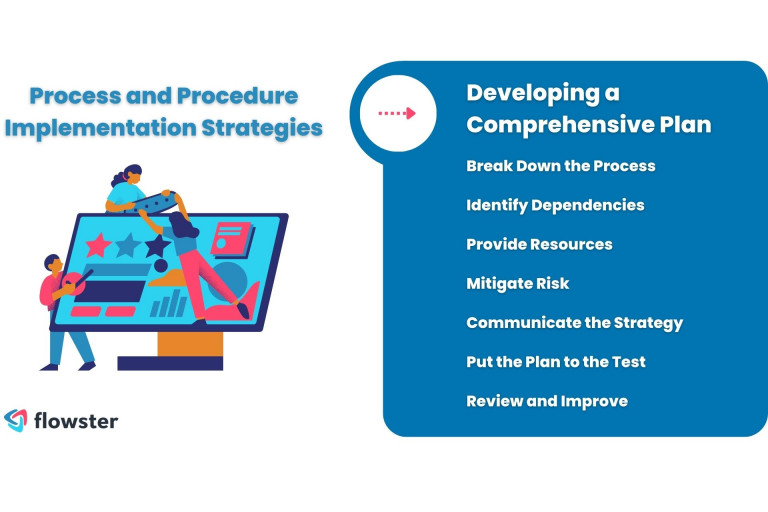
Break Down the Process
Start by breaking down the implementation process into manageable steps. Figure out the key milestones, tasks, and activities needed to achieve your desired outcomes. Create a timeline that shows the sequence of these steps and sets deadlines for each phase. This timeline keeps your implementation on track and ensures smooth progress.
Identify Dependencies
Consider the dependencies and connections between different tasks and activities. Some tasks may rely on others being completed first, while others can happen concurrently. By identifying these dependencies, you can prioritize tasks and allocate resources accordingly, avoiding delays and bottlenecks.
Provide Resources
Allocate the necessary resources, both human and technological, to support the implementation process. Determine the staffing requirements and skills needed for each task or activity. Make sure the people responsible for the implementation have the right training, knowledge, and support to do their jobs effectively. Also, assess the technological infrastructure and tools required to support the implementation, like software systems or communication platforms.
Mitigate Risk
Anticipate and address potential risks and challenges that may come up during the implementation. Identify possible obstacles, such as resistance to change or limited resources, and develop strategies to minimize their impact. Taking a proactive approach helps you handle challenges effectively and maintain momentum throughout the implementation.
Communicate the Strategy
Share the implementation plan with all stakeholders involved, including employees, managers, and executives. Clearly communicate the objectives, benefits, timelines, and expected outcomes of the implementation. Transparent communication promotes understanding, generates support, and encourages collaboration among all stakeholders.
Put the Plan to the Test
Consider piloting or testing the new processes and procedures in a controlled environment before implementing them organization-wide. This allows for adjustments and improvements based on feedback and lessons learned. Piloting helps you identify and address any issues or areas for improvement before rolling out the processes and procedures to everyone.
Review and Improve
Regularly review and update the plan as needed. The implementation process may require adjustments based on evolving needs and feedback received during the implementation. Being flexible and adaptable ensures that your plan remains relevant and effective throughout the implementation journey.
Overall, developing a solid plan is crucial for successful implementation. By breaking down the process, identifying milestones and dependencies, allocating resources, addressing risks, communicating the plan, and allowing for testing and adjustments, you create a roadmap that guides your implementation efforts. A well-structured plan sets the foundation for the smooth and successful implementation of new processes and procedures in your business.
Assigning Responsibilities and Roles
Assigning clear responsibilities and roles is super important for successfully implementing new processes and procedures in your business. When people understand their roles and responsibilities, they can contribute effectively to the implementation efforts and ensure that tasks are coordinated smoothly.
Here’s what you can do:
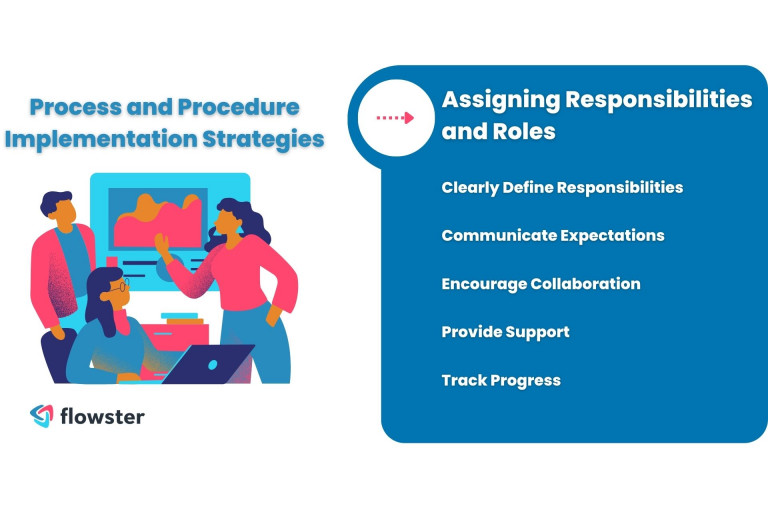
Clearly Define Responsibilities
Start by clearly defining the specific responsibilities for each task or activity involved in the implementation process. Identify the key roles needed for successful implementation and consider the skills and expertise required for each role. This could include project managers, team leaders, subject matter experts, or trainers.
Assign individuals to these roles based on their competencies, knowledge, and experience. Take into account their availability and workload to ensure they can dedicate the necessary time and effort to their assigned responsibilities. It’s important to strike a balance between leveraging existing expertise within the organization and providing opportunities for growth and development.
Communicate Expectations
Communicate the assigned responsibilities and roles to the individuals involved in the implementation process. Clearly outline their tasks, expectations, and deliverables. Help them understand how their contributions align with the overall objectives and desired outcomes. This creates a sense of ownership, accountability, and purpose.
Encourage Collaboration
Foster collaboration and teamwork among the individuals involved. Emphasize the importance of working together towards a shared goal. Encourage open communication, knowledge sharing, and problem-solving. This collaborative approach creates synergy and ensures everyone is aligned and working towards the same objectives.
Establish mechanisms for coordination and decision-making. Clearly define lines of authority and make sure individuals know who to approach for guidance or approval. Regularly scheduled meetings or check-ins can be helpful for keeping everyone informed, addressing challenges, and making collective decisions.
Provide Support
Support individuals in their assigned roles by providing the necessary resources. Ensure they have the tools, training, and information needed to carry out their responsibilities effectively. Offer guidance and mentorship where needed. This support empowers individuals to perform their roles with confidence and competence.
Track Progress
Regularly monitor progress and provide feedback to individuals based on their performance. Recognize and celebrate achievements while addressing any issues or challenges that may arise. This ongoing feedback loop keeps individuals motivated and engaged throughout the implementation process.
In short, assigning roles and responsibilities is vital for successful implementation. By clearly defining responsibilities, communicating expectations, promoting collaboration, providing support, and tracking progress, you create a framework that allows people to contribute their expertise and help implement new processes and procedures. Assigning tasks and roles promotes accountability, teamwork, and purpose.
Communicating the Implementation Plan
Clear and transparent communication of the implementation plan is super important for successfully implementing new processes and procedures in your business. Effective communication ensures that everyone is aware of the plan, its objectives, timelines, and expected outcomes. It promotes understanding, buy-in, and collaboration, creating a supportive environment for the implementation process.
Here’s what you can do:
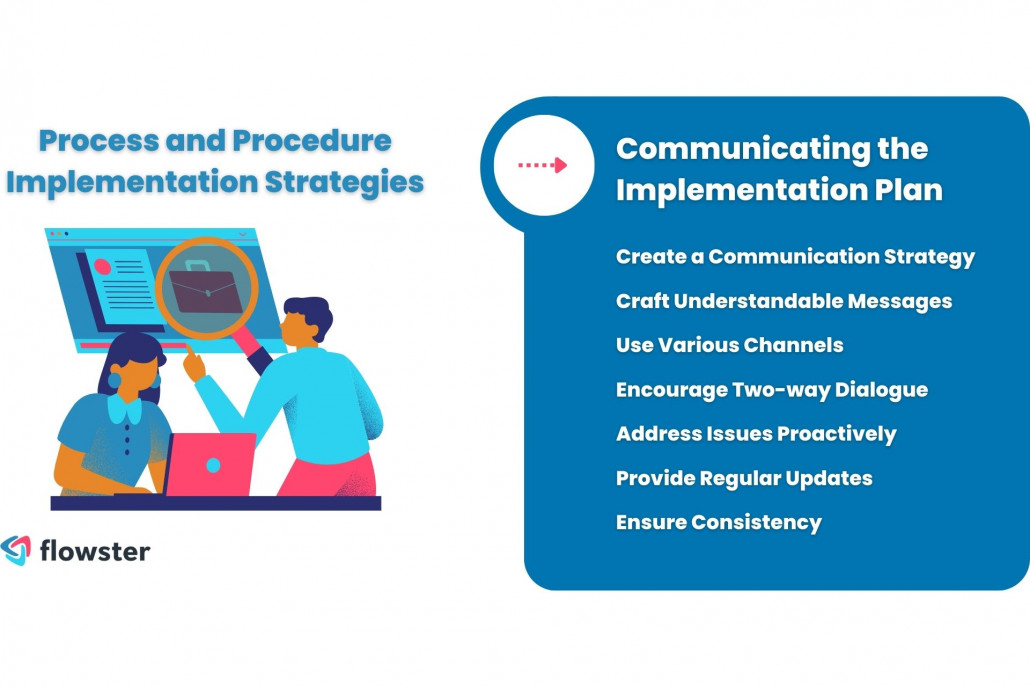
Create a Communication Strategy
Start by developing a communication strategy that outlines key messages, target audiences, communication channels, and frequency. Consider the different stakeholders involved, like employees, managers, executives, and other relevant parties. Tailor your communication approach to their needs and preferences.
Craft Understandable Messages
Craft concise and clear messages that effectively convey the purpose and benefits of the implementation. Highlight the positive impact it will have on the organization, teams, and individuals. Use language that is easily understandable, avoiding jargon or technical terms that may create confusion.
Use Various Channels
Utilize different communication channels to reach different audiences. This could include emails, newsletters, intranet platforms, team meetings, town halls, or training sessions. Choose the channels that are most effective in reaching and engaging the intended audience. Consider using visual aids like infographics or presentations to enhance understanding and retention of information.
Encourage Two-way Dialogue
Foster two-way communication by encouraging feedback, questions, and open dialogue. Create opportunities for individuals to express their concerns, provide suggestions, or seek clarification. Build a culture of transparency and psychological safety where people feel comfortable expressing their thoughts and opinions.
Address Issues Proactively
Address any concerns or resistance to the implementation plan proactively. Anticipate potential questions or objections and prepare responses that directly address them. Emphasize the benefits and positive impact the implementation will bring to businesses and individuals. Tailor your messaging to address specific concerns or challenges that different stakeholders may have.
Provide Regular Updates
Keep stakeholders informed and engaged by providing ongoing updates and progress reports throughout the implementation process. This creates a sense of involvement and ownership. Celebrate milestones and achievements along the way to maintain motivation and excitement.
Ensure Consistency
Lastly, ensure that communication is consistent and timely. Be responsive to inquiries and provide timely feedback or clarification. Regularly assess the effectiveness of your communication efforts and make adjustments as needed to ensure that key messages are effectively conveyed.
Summing up, clear and transparent communication is vital for successful implementation. By creating a clear communication strategy, crafting understandable messages, using various channels, encouraging two-way dialogue, proactively addressing concerns, providing ongoing updates, and ensuring consistency, you establish a communication framework that promotes understanding, engagement, and collaboration throughout the implementation process. Clear communication helps your business implement new processes and procedures effectively.
Training and Development
Providing proper training and development opportunities is super important for successfully implementing new processes and procedures in your business. Training equips employees with the knowledge, skills, and competencies they need to adapt to and excel at new ways of doing things. It ensures a smooth transition and fosters a culture of continuous learning and improvement.
Here’s what you can do:
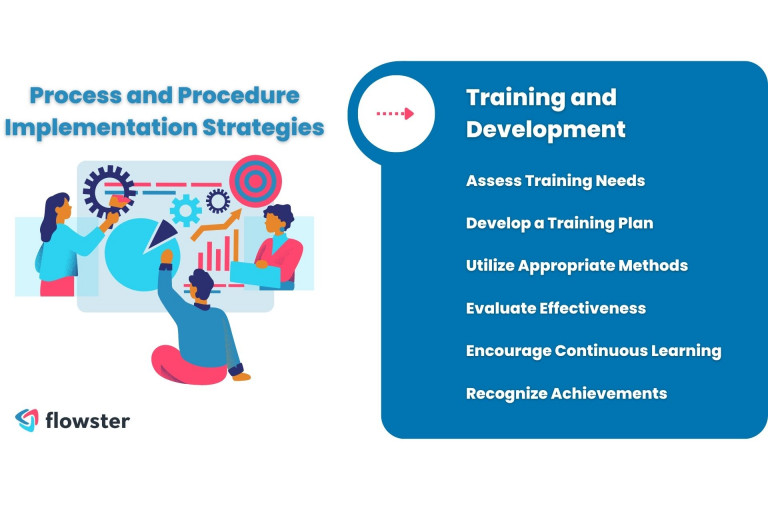
Assess Training Needs
Start by assessing the training needs of your employees based on the changes introduced by the new processes and procedures. Identify the specific areas where training is required, such as learning new software, understanding revised workflows, or acquiring additional skills needed to perform tasks effectively.
Develop a Training Plan
Create a comprehensive training plan that outlines the objectives, content, methods, and timeline for delivering training. Choose the most suitable training methods based on the nature of the processes and procedures and the learning preferences of your employees. This could include instructor-led training, online courses, workshops, simulations, or on-the-job training.
Consider utilizing internal subject-matter experts or trainers who have expertise in the new processes and procedures. They can provide insights, guidance, and practical examples specific to your business. Additionally, external training resources like industry experts or specialized training providers can offer valuable perspectives and best practices.
Utilize Appropriate Methods
Ensure that the training is accessible and inclusive. Provide training materials in multiple formats to accommodate different learning styles and preferences. Make the training sessions interactive and engaging to enhance the retention and application of knowledge. Encourage active participation and provide opportunities for hands-on practice and feedback.
Evaluate Effectiveness
Continuously evaluate the effectiveness of the training programs. Gather feedback from participants to assess the relevance, clarity, and impact of the training. Monitor the application of newly acquired knowledge and skills in the workplace. Use this feedback to make necessary adjustments to the training programs and ensure they meet the needs of your employees.
Encourage Continuous Learning
Foster a culture of continuous learning and development beyond the initial training. Encourage employees to pursue ongoing learning opportunities related to the new processes and procedures. This can include workshops, conferences, online courses, or mentorship programs. Support and invest in employees’ professional growth as it contributes to their effectiveness in implementing and sustaining the new processes and procedures.
Recognize Achievements
Recognize and celebrate the achievements of employees who have successfully embraced the new processes and procedures. This reinforces the importance of training and development, motivates others to engage in learning, and creates a positive environment for growth and improvement.
Therefore, training and development are crucial for successful implementation. By assessing training needs, developing a comprehensive training plan, using appropriate methods, evaluating effectiveness, fostering continuous learning, and recognizing achievements, you empower employees to adapt and excel in new processes and procedures. Training and development create skilled and knowledgeable workers who can effectively implement and sustain organizational changes.
Monitoring and Evaluation
Monitoring and evaluation play a vital role in successfully implementing new processes and procedures in your business. They help you track progress, assess effectiveness, and make data-driven decisions to ensure the changes are achieving the desired outcomes.
Here’s what you can do:
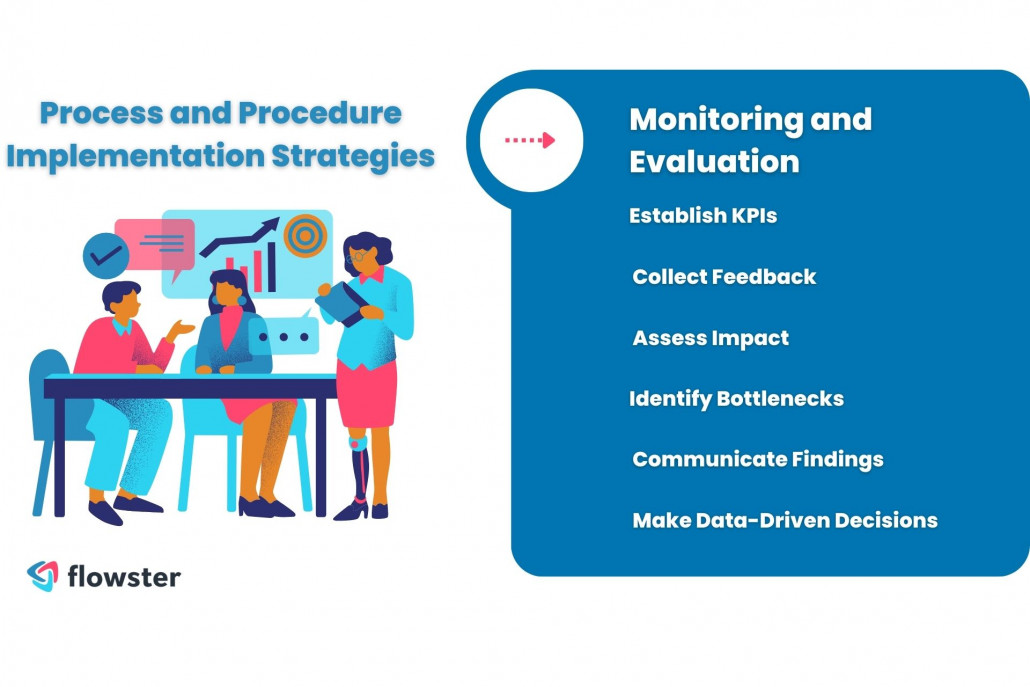
Establish KPIs
Start by setting key performance indicators (KPIs) that align with the objectives of the new processes and procedures. These KPIs should be measurable and reflect the impact and effectiveness of the changes. Examples include productivity metrics, error rates, customer satisfaction scores, or process cycle times.
Regularly monitor performance against these KPIs to track progress and effectiveness. Collect relevant data and information to identify trends and areas for improvement. Use technology tools, reporting mechanisms, and data analytics to streamline the monitoring process and gain meaningful insights.
Collect Feedback
Gather feedback from employees directly involved in the implementation process. This can be done through surveys, focus groups, or one-on-one discussions. Their perspectives and insights provide valuable information about challenges, successes, and areas for improvement. Encourage open and honest feedback to foster a culture of continuous improvement.
Assess Impact
Evaluate the impact of the new processes and procedures on the business as a whole. Assess whether the intended benefits, such as increased efficiency, reduced costs, or improved customer satisfaction, are being realized. Compare performance and outcomes before and after the implementation to identify significant improvements or areas that need attention.
Identify Bottlenecks
Identify any bottlenecks, challenges, or deviations from expected outcomes. Analyze the root causes of these issues and develop action plans to address them effectively. This could involve process redesign, additional training, resource allocation adjustments, or changes to supporting technologies.
Communicate Findings
Share the findings from monitoring and evaluation with all stakeholders. Communicate the progress, successes, and areas for improvement. Transparency builds trust, demonstrates a commitment to continuous improvement, and encourages collective ownership of the implementation process.
Make Data-Driven Decisions
Use the insights gained from monitoring and evaluation to make data-driven decisions. Identify opportunities for optimization, fine-tuning, or expansion of the implemented processes and procedures. Continuously adapt and improve based on feedback and outcomes observed during monitoring and evaluation.
Monitoring and evaluation provide a systematic assessment of implemented processes and procedures. By setting KPIs, collecting feedback, evaluating impact, identifying bottlenecks, communicating findings, and making data-driven decisions, you keep the implementation on track and achieve the desired results. Monitoring and evaluation foster a culture of continuous improvement that optimizes operations and drives long-term success.
Identifying Areas for Improvement
Identifying areas for improvement is a crucial step in successfully implementing new processes and procedures in your business. It allows you to assess the effectiveness of the changes and find opportunities for refinement and optimization.
Here’s what you can do:
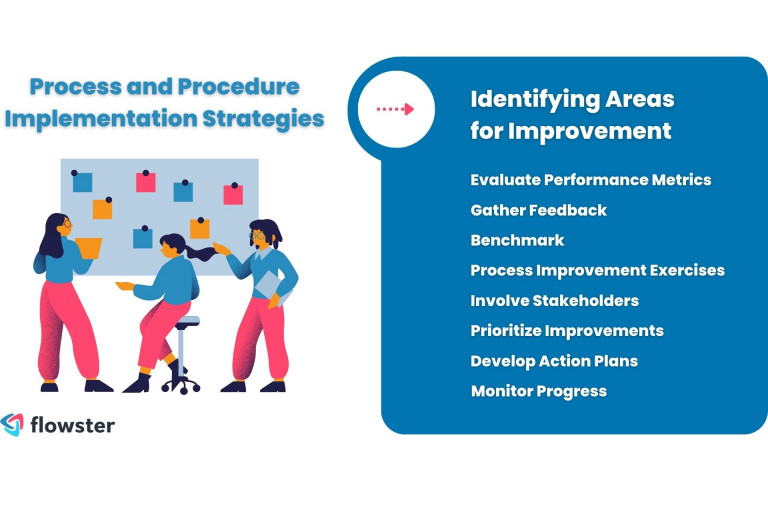
Evaluate Performance Metrics
Regularly evaluate the implemented processes and procedures to identify areas for enhancement. Review performance metrics, gather feedback from stakeholders, and analyze insights from monitoring and evaluation activities. Look for patterns, trends, and areas where improvements can be made.
Gather Feedback
Encourage employees to provide suggestions and ideas for improvement. Foster a culture that values continuous improvement and innovation. Employees directly involved in the implementation process often have valuable insights into practical aspects and challenges. Create channels like suggestion boxes or team meetings for employees to share their suggestions and ideas.
Benchmark
Stay informed about advancements in your industry, technological innovations, and changes in customer expectations. Benchmark your processes and procedures against industry best practices and emerging trends. Identify any gaps or areas for improvement to stay competitive and deliver superior results.
Process Improvement Exercises
Consider conducting exercises like value stream mapping or process mapping to identify bottlenecks, inefficiencies, or unnecessary steps. These exercises help visualize the flow of work, identify areas of waste, and streamline processes. Involve employees from different levels and departments to gain diverse perspectives and insights.
Involve Stakeholders
Involve stakeholders in the identification of areas for improvement. The implemented changes impact executives, managers, and employees. Seek their input and feedback to ensure their experiences and needs are considered. Engaging stakeholders creates a sense of ownership and commitment to driving improvements.
Prioritize Improvements
Prioritize areas for improvement based on their impact and feasibility. Assess the potential benefits, costs, and resource requirements for each improvement. Focus on improvements that align with the organization’s objectives and have the greatest potential to enhance efficiency, quality, or customer satisfaction.
Develop Action Plans
Develop action plans to address the identified areas for improvement. Clearly define specific steps, responsible individuals, timelines, and expected outcomes for each improvement. Communicate the action plans to stakeholders to ensure clarity and understanding.
Monitor Progress
Continuously monitor the progress and outcomes of improvement initiatives. Assess the impact of implemented improvements and gather feedback from stakeholders. Adjust action plans based on feedback and new insights gained during the implementation process.
Continuous improvement of processes and procedures relies on identifying areas for improvement. Evaluate performance metrics, gather feedback, benchmark against industry best practices, involve stakeholders, conduct process improvement exercises, prioritize improvements, develop action plans, and monitor progress. Your business’ success depends on identifying and implementing improvements.
Continuous Improvement and Adaptation
Continuous improvement and adaptation are crucial principles for successfully implementing new processes and procedures in your business. By embracing a mindset of ongoing improvement and staying adaptable, you can optimize operations, respond to changes, and drive sustained success.
Here’s what you can do:
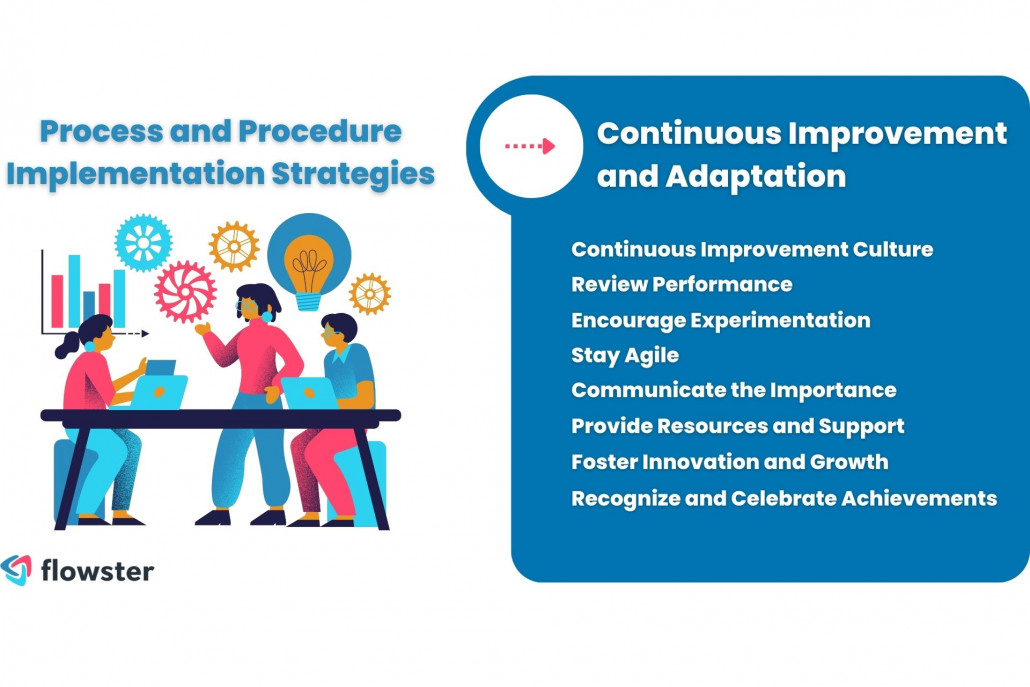
Continuous Improvement Culture
Create a culture of continuous improvement throughout your organization. Encourage employees at all levels to actively seek enhancement opportunities and share their ideas. Establish channels for feedback and collaboration, like regular team meetings or suggestion platforms, to encourage open discussions and idea sharing.
Review Performance
Regularly review performance metrics and gather feedback from stakeholders to identify areas for further improvement. Analyze the collected data and use it to inform decision-making. Taking a data-driven approach ensures that improvements are targeted and focused on areas with the greatest potential impact.
Encourage Experimentation
Foster an environment where employees feel empowered to experiment and innovate. Encourage them to try new approaches, test ideas, and learn from both successes and failures. Celebrate and recognize employees who take initiative in driving positive change. Encourage cross-functional collaboration and knowledge sharing to leverage diverse perspectives.
Stay Agile
Stay agile and adaptable in the face of change. Monitor the external business environment, industry trends, and customer expectations. Proactively identify potential challenges or opportunities that may require adjustments to your processes and procedures. Embrace new technologies, methodologies, and best practices to further enhance operations.
Communicate the Importance
Regularly communicate the importance of continuous improvement and adaptation to all stakeholders. Clearly articulate the benefits and value it brings to the business and its employees. Encourage a growth mindset where learning and development are seen as integral to personal and organizational success.
Provide Resources and Support
Allocate the necessary resources and support for continuous improvement initiatives. Provide time, budget, and tools that empower employees to pursue improvement projects or engage in training and development activities. Support their efforts by providing training, coaching, and mentorship opportunities.
Foster Innovation and Growth
Establish mechanisms for capturing and implementing improvement ideas. Create a structured process for evaluating and prioritizing improvement initiatives. Assign responsibilities and accountability for driving these initiatives forward. Track the progress and outcomes of improvement projects and communicate the results to stakeholders.
Recognize and Celebrate Achievements
Regularly celebrate and recognize achievements resulting from continuous improvement efforts. This reinforces the importance of ongoing enhancement and motivates employees to continue seeking improvement opportunities.
For employees who have been with the organization for a long time, it’s especially important to keep them motivated and feeling valued so their interest in ongoing progress doesn’t fade. This can include team lunches, public recognition, or small rewards, and service award plaques such as those from Successories are a meaningful way to recognize long-term dedication and milestones.
Overall, your company’s long-term success depends on continuous improvement and adaptation. Foster a culture of continuous improvement, stay agile and adaptable, encourage experimentation, provide resources and support, communicate the importance of ongoing enhancement, and recognize achievements. Continuous improvement ensures your processes and procedures adapt to the changing needs of your business and stakeholders, sustaining success and competitiveness.
Addressing Challenges and Overcoming Resistance
When organizations implement new processes and procedures, they often face challenges and encounter resistance from employees. It’s important to proactively address these issues to ensure the successful adoption and integration of the changes.
Let’s break it down:
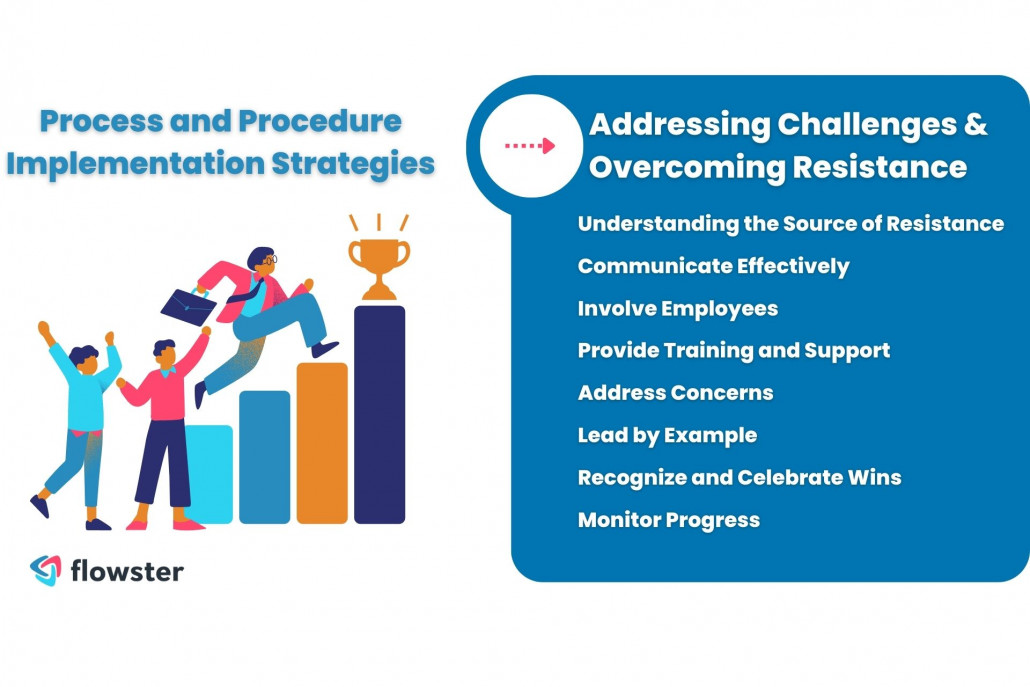
Understanding the Source of Resistance
First, identify and understand the specific challenges and sources of resistance that may arise. This could include fear of change, a lack of awareness or understanding, concerns about job security, or skepticism about the benefits of the new processes. Knowing the root causes helps develop targeted strategies to address them effectively.
Communicate Effectively
Effective communication plays a critical role in addressing challenges and overcoming resistance. Clearly and consistently communicate the reasons for the change, the benefits it brings, and the support available during the implementation process. Tailor your messages to address specific concerns or challenges employees may have.
Involve Employees
Involve employees in the change process by seeking their input and feedback. Create opportunities for them to express concerns, ask questions, and share their perspectives. Actively listen to their feedback and address their concerns empathetically. This involvement fosters ownership, increases engagement, and reduces resistance.
Provide Training and Support
Offer adequate training and support to employees during the transition. Ensure they have the knowledge and skills needed to adapt to the new processes. Provide additional resources like job aids, documentation, or one-on-one coaching to support their learning and implementation efforts. Empower employees to actively participate in the change and provide them with the necessary tools and resources to succeed.
Address Concerns
Address perceived or real threats to job security by providing clarity on how the changes will impact job roles and responsibilities. Offer reassurance and guidance on how employees can adapt and thrive in the new environment. Provide opportunities for professional development and growth to demonstrate a commitment to their success.
Lead by Example
Lead by example and show commitment to the change. Leaders and managers should model the desired behaviors and actively support the implementation of the new processes. Engage in open and transparent communication, address concerns promptly, and provide ongoing feedback and guidance. This leadership approach builds trust and confidence among employees.
Recognize and Celebrate Wins
Recognize and celebrate small wins and milestones along the way. Acknowledge and reward employees’ efforts and achievements in adapting to the changes. This recognition boosts morale, reinforces positive behaviors, and creates a supportive environment for the implementation process.
Monitor Progress
Regularly assess the progress and impact of the changes. Monitor the adoption and integration of the new processes. Collect feedback from employees and stakeholders to understand their experiences and identify ongoing challenges or resistance. Adjust your strategies and approaches as needed to effectively address emerging issues.
By proactively addressing challenges and overcoming resistance, you can ensure the smooth implementation of new processes and procedures. Understanding resistance, communicating effectively, involving employees, providing training and support, addressing concerns, leading by example, recognizing achievements, and continuously assessing progress create a supportive environment that encourages change and integration.
Celebrating Success and Recognizing Achievements
Celebrating success and recognizing achievements is a key part of implementing new processes and procedures within your organization. By acknowledging milestones and accomplishments, you create a positive and motivating environment that fosters engagement, teamwork, and ongoing commitment to the changes.
Here’s how you can make it happen:
Establish Milestones
Start by setting clear milestones and goals that signify significant progress in the implementation process. These could include key deliverables, successful adoption of the new processes, or positive outcomes resulting from the changes. Be specific about what success looks like and communicate these criteria to all stakeholders.
Communicate Progress
Regularly update the organization on the progress and achievements. Share updates, milestones, and positive outcomes through various channels like emails, newsletters, team meetings, or company-wide announcements. Highlight the impact and benefits of the changes on the business, teams, and individuals.
Recognize Teams and Individuals
Recognize and appreciate the efforts and contributions of individuals and teams that played a vital role in the implementation process. Celebrate their achievements and publicly acknowledge their dedication and hard work. You can do this through verbal praise, written appreciation, awards, or team celebrations.
Encourage Peer-to-Peer Recognition
Foster a culture of peer-to-peer recognition and appreciation. Create opportunities for employees to recognize and celebrate each other’s contributions. This can be done through platforms like recognition boards, dedicated channels on the company’s intranet, or regular team meetings where individuals can express gratitude and acknowledge their colleagues.
Make Celebrations Inclusive and Meaningful
Ensure that celebrations and recognition events are inclusive and meaningful. Tailor them to the preferences and interests of the individuals and teams involved. This could include team lunches, small gatherings, certificates of appreciation, or personalized tokens of recognition. The key is to create a positive and supportive environment that values and appreciates their accomplishments.
Share Success Stories
Highlight success stories and share best practices. Show examples of how the implemented changes have positively impacted the business, teams, or individuals. By sharing these stories, you not only recognize achievements but also inspire and motivate others to embrace and excel at the changes.
Celebrate Small Wins
Foster a culture of continuous improvement by celebrating not only major milestones but also small wins along the way. Recognize and appreciate the efforts of individuals and teams who demonstrate continuous learning, adaptability, and innovation. Celebrating these incremental successes creates a positive feedback loop that reinforces desired behaviors and encourages ongoing improvement.
Assess the Impact
Regularly assess the impact of the changes and use the insights gained to inform future celebrations and recognition efforts. Seek feedback from employees and stakeholders to understand their experiences and preferences for recognition. Adapt and refine your strategies based on this feedback to ensure their effectiveness.
Therefore, celebrating success and recognizing achievements is crucial for successful implementation. By setting milestones, communicating progress, recognizing individuals and teams, encouraging peer-to-peer recognition, making celebrations meaningful, sharing success stories, celebrating small wins, and assessing the impact, you create a culture of appreciation and sustain business success.
Create and Implement SOPs with Flowster's AI-Driven Automation
Using Workflow Automation Tools for Efficient Implementation
In today’s digital age, workflow automation tools have become super important for businesses that want to implement processes and procedures effectively. These tools offer a bunch of benefits that make things easier, faster, and more seamless.
Let’s dig into how workflow automation tools can help make implementation successful:
Streamlined Process Execution
First off, these tools streamline the execution of processes. They let businesses digitize and automate their tasks, which means no more manual and time-consuming work. By automating repetitive steps, employees can focus on more important stuff, which leads to better productivity and faster execution. Plus, these tools provide a centralized platform where you can design, execute, and keep an eye on workflows, making sure everyone’s on the same page.
Increased Visibility and Transparency
Workflow automation tools also give you real-time visibility into the progress of your tasks. Managers and stakeholders can easily see what’s going on, identify any issues, and step in when needed. This boosts transparency, holds everyone accountable, and helps make timely decisions. You can even get insights into how your processes are performing, find areas to improve, and use data to make smart decisions and optimize your implementation efforts.
Standardized and Consistent Execution
Another cool thing about these tools is that they enforce consistency. By defining workflows within the tool, you ensure that tasks are done the same way every time, following your rules and guidelines. This reduces mistakes, cuts down on rework, and improves the overall quality of your output. Plus, automation tools have built-in checks and validations, so you can make sure you’re meeting compliance requirements and regulations.
Efficient Task Assignment and Collaboration
When it comes to task assignment and collaboration, workflow automation tools make things super efficient. Assigning tasks is a breeze because the tools automatically send them to the right people or teams based on your criteria. Everyone stays in the loop with notifications and reminders about their responsibilities, deadlines, and dependencies. And with collaboration features, employees can easily communicate, share information, and work together on tasks within the tool. It creates a smooth and efficient work environment.
Enhanced Tracking and Reporting
These tools also offer awesome tracking and reporting capabilities. You can generate detailed reports on how your processes are performing, how long they’re taking, how resources are being used, and other important metrics. This lets you analyze the data and find areas to optimize and improve. With comprehensive analytics at your fingertips, you can make informed decisions, refine your processes, and keep getting better at implementation.
Integration with Other Systems
Many workflow automation tools even integrate with other systems and applications. That means you can exchange data seamlessly and keep information flowing smoothly between different processes. You can connect your workflow automation tool with customer relationship management (CRM) systems, enterprise resource planning (ERP) systems, and other relevant tools to make sure everything works together seamlessly.
By using workflow automation tools alongside your processes and procedures, you can make them even more effective and efficient. These tools streamline execution, boost visibility, enforce consistency, foster collaboration, provide robust tracking and reporting, and integrate with other systems.
By harnessing the power of workflow automation, you can optimize your implementation efforts and achieve seamless integration, resulting in better productivity, higher quality, and improved outcomes for your business.
Conclusion: Implement Processes and Procedures in Your Business Effectively
In conclusion, implementing new processes and procedures is crucial for your business’s success. By following the strategies and insights discussed in this article, organizations can lay the foundation for enhanced performance and seamless integration.
It requires collaboration, commitment, and a shared vision among all stakeholders. Embrace the opportunities, overcome challenges, and celebrate achievements along the way.
Effective implementation is an ongoing process that requires adaptability and continuous improvement. By doing so, businesses can position themselves for sustained growth and a competitive edge in today’s dynamic business landscape.
Additionally, the effective implementation of processes and procedures, combined with the utilization of workflow automation tools, sets the stage for organizational success. It enables businesses to achieve their goals, enhance productivity, and deliver exceptional outcomes.
By adopting these strategies, businesses can navigate the ever-changing business landscape, stay competitive, and drive sustainable growth in the long run. Take action now and embark on the journey of implementing new practices for long-term success.
Are you looking for a simple way to create and document processes?
With Flowster, you can easily create standard operating procedures or work instructions by leveraging the power of AI, or you can browse our library of pre-built templates in the Flowster Marketplace.
Do you want assistance? Use our “Done for You” services to have our quality and improvement professionals create custom workflows for you.
Recent Articles
Would you like to learn more? See our other informative articles.




6 Responses
This blog post really highlights the importance of having clear processes and procedures in place! I especially appreciated the practical strategies you provided for implementation. It’s a great reminder that streamlining workflows can lead to significant improvements in efficiency. Looking forward to applying these tips in my own business!
This post really highlights the importance of clear processes in business! I especially appreciated the step-by-step strategies you provided for implementation. I’m definitely going to apply some of these ideas to my own workflow. Thank you for sharing!
This post offers some fantastic insights into streamlining processes in our business! I especially appreciated the emphasis on clearly defining roles and responsibilities. Implementing these strategies could really help improve our team’s efficiency. Thanks for sharing!
Great insights on implementing processes and procedures! I particularly liked the emphasis on clear communication and training. It’s so crucial for team members to understand their roles in the new system. Looking forward to trying out some of these strategies in my own business!
Great insights on implementing processes and procedures! I especially appreciated the emphasis on communication and training. It’s crucial for ensuring everyone is on the same page. Looking forward to applying some of these strategies in my own business!
Great insights on implementing processes and procedures! I particularly appreciated the emphasis on employee involvement—engaging the team can really make a difference in ensuring everyone is on board. Looking forward to trying out some of these strategies in my own business!