


Running a small business is no small feat. Between managing day-to-day operations, keeping customers happy, and staying ahead of the competition, it’s easy to feel overwhelmed. Did you know that small businesses waste a significant amount of their time on repetitive tasks? That’s where workflow automation comes in.
Workflow automation is all about using technology to streamline your processes, save time, and boost efficiency. It significantly transforms the operations of small businesses. Whether it’s automating invoicing, scheduling, or customer follow-ups, the benefits of workflow automation are hard to ignore.
In this article, we’ll dive into the top 5 advantages of workflow automation for small businesses. From cutting costs to improving accuracy, you’ll see why it’s a must-have tool for growth. Ready to transform the way you work? Let’s get started.
Article Outline
What is Workflow Automation? A Beginner’s Guide
Before diving into the benefits of workflow automation, let’s break down what it actually means. Workflow automation is the use of software or tools to automate repetitive, manual tasks in your business. Think of it as having a virtual assistant that handles the boring stuff so you can focus on what really matters.
Why It Matters for Small Businesses
For small businesses, time and resources are precious. Automating tasks like email reminders, data entry, or inventory tracking can save hours every week. It’s not just about working harder—it’s about working smarter.
Key Features of Workflow Automation
- Task Automation: Automates repetitive tasks like sending invoices or updating spreadsheets.
- Process Optimization: Streamlines workflows to reduce bottlenecks and improve efficiency.
- Integration: Connects with your existing tools (e.g., CRM, email, project management software) for seamless operations.
Common Processes to Automate in Business
Not sure where to start? Here are a few processes to automate in business:
- Customer onboarding
- Email marketing campaigns
- Inventory management
- Employee scheduling
Workflow automation isn’t just for big corporations. Small businesses can reap huge rewards by adopting it. If you’re new to the concept, check out our detailed guide titled Workflow Automation for Beginners to get started.
Flowster's AI-Driven Automation
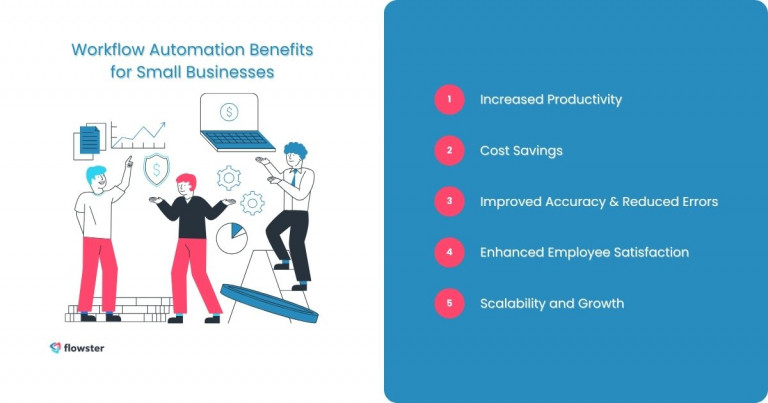
Top 5 Benefits of Workflow Automation for Small Businesses
Every minute and dollar counts when running a small business. That’s why more and more businesses are turning to workflow automation to streamline their operations. The benefits of workflow automation go beyond just saving time—it can transform the way you work. Let’s explore the top 5 advantages.
1. Increased Productivity
Workflow automation takes over repetitive tasks, freeing up your team to focus on more strategic work. For example, automating email follow-ups or report generation can save hours each week. This boost in productivity means you can get more done without hiring additional staff.
2. Cost Savings
By reducing manual labor and minimizing errors, automation helps cut operational costs. While there’s an initial investment in tools, the long-term savings are significant. Think fewer mistakes, less wasted time, and better resource allocation.
3. Improved Accuracy and Reduced Errors
Humans make mistakes, but automated systems don’t. Whether it’s data entry, invoicing, or inventory tracking, automation ensures tasks are completed accurately every time. This reduces costly errors and builds trust with your customers.
4. Enhanced Employee Satisfaction
Nobody enjoys performing monotonous tasks every day. Automation relieves your team of these tedious tasks, resulting in happier and more engaged employees. Plus, it can reduce burnout and improve retention.
5. Scalability and Growth
As your business grows, so do your workloads. Workflow automation allows you to handle increased demand without proportionally increasing your team. This scalability is crucial for small businesses looking to compete in today’s fast-paced market.
Ready to supercharge your small business? Dive deeper into how workflow automation can transform your operations by reading this article: Supercharge Your Small Business with Workflow Automation.
Real-Life Example of Workflow Automation in Small Businesses
Seeing the benefits of workflow automation in action can be incredibly inspiring. Real-world examples show how small businesses are using automation to save time, reduce costs, and grow faster. Let’s take a look at a detailed case study from a video that highlights the power of automation.
Case Study: Watch How Automation Transformed a Small Business
Curious how workflow automation works in the real world? In this video titled “Jason Egan – Flowster Case Study,” you’ll see how a small business streamlined its order processing and customer communication using automation. The results? Faster delivery times, fewer errors, and happier customers. It’s a perfect example of the benefits of workflow automation in action.
This example proves that the benefits of workflow automation aren’t just theoretical—they’re real and achievable for small businesses.
How to Get Started with Workflow Automation
Now that you know the benefits of workflow automation, you’re probably wondering how to get started. The good news? It’s easier than you think. With the right approach, you can begin automating tasks in no time. Here’s a step-by-step guide to help you kickstart your automation journey.
Step 1: Identify Repetitive Tasks
Start by pinpointing the tasks that eat up the most time. These are often repetitive, manual processes like data entry, email follow-ups, or scheduling. Look for processes to automate in business that are simple but time-consuming.
Step 2: Choose the Right Tools
There are plenty of workflow automation tools out there, so pick one that fits your needs and budget. Popular options include Zapier, Trello, and Asana. These tools can help you automate everything from project management to customer communication.
Step 3: Start Small and Scale Up
Don’t try to automate everything at once. Start with one or two tasks, test the process, and refine it as needed. Once you see the benefits of workflow automation in action, you can expand to other areas of your business.
Step 4: Train Your Team
Automation works best when everyone is on board. Make sure your team understands how to use the new tools and processes. This will ensure a smooth transition and maximize the impact of automation.
Step 5: Monitor and Optimize
Automation is not a solution that can be set and forgotten. Regularly review your workflows to identify areas for improvement. This will help you get the most out of your automation efforts.
Are you prepared to initiate the process? Check out this helpful resource: Free Small Business SOP Templates. These templates will help you document and standardize your processes, making automation even easier.
Capture Your Processes in Minutes!
Conclusion: Unlock the Power of Workflow Automation
Workflow automation is a transformative tool for small businesses. From boosting productivity and cutting costs to improving accuracy and employee satisfaction, the benefits of workflow automation are undeniable. It’s a smart investment that can help you work smarter, not harder.
By automating repetitive tasks, you free up time to focus on what really matters: growing your business and delighting your customers. Whether you’re just starting out or looking to scale, workflow automation can give you the edge you need to succeed.
Ready to take the first step? You don’t need to begin from the beginning. Explore free workflow templates at Flowster’s Marketplace and see how easy it is to automate your processes. Your future self will thank you!



