


Imagine the chaos. The fire alarm blares, sending a wave of confusion through the office. Employees scramble for exits, unsure of the designated meeting point. Panic sets in as precious seconds tick by. This scenario, while hopefully rare, underscores the critical role of clear policies and procedures in any organization.
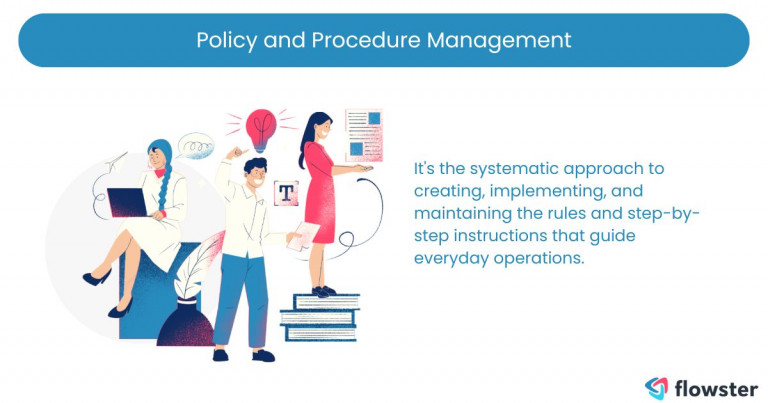
Effective policy and procedure management isn’t just about fire drills. It’s the backbone of a well-functioning organization. Simply put, it’s the systematic approach to creating, implementing, and maintaining the rules and step-by-step instructions that guide everyday operations.
From handling customer complaints to managing data security, these policies and procedures ensure everyone is on the same page, reducing risk and boosting efficiency. Let’s delve deeper into how a strong policy and procedure management system can keep your organization running smoothly and safely.
Article Outline
What is Policy Management and What Does It Look Like?
So, we’ve established the importance of clear policies and procedures, but what exactly is policy management, and how does it translate into the day-to-day operations of a business?
Policy management is the ongoing process that governs the creation, implementation, communication, and maintenance of an organization’s policies. These policies act as the foundational guidelines that dictate how employees should conduct themselves and approach their work.
- Setting the Standard: Policies establish clear expectations for employee behavior, from dress code to ethical conduct. A well-defined code of conduct, for example, outlines acceptable workplace behavior and helps foster a professional and respectful environment.
- Promoting Compliance: Many policies are directly tied to legal and regulatory compliance. A data security policy, for instance, ensures the organization handles sensitive information according to industry standards and avoids potential legal repercussions.
- Real-World Examples: Policies come in all shapes and sizes, addressing a wide range of workplace scenarios. Here are just a few examples:
- Code of Conduct: Defines expected behavior and promotes ethical practices.
- Data Security Policy: Outlines procedures for handling and protecting sensitive information.
- Anti-discrimination Policy: Ensures a workplace free from discrimination and harassment.
- Social Media Policy: Provides guidelines for employee conduct on social media platforms.
These are just a handful of illustrations, and the specific policies implemented will vary depending on the industry and size of the organization. However, they all contribute to a central goal: creating a clear and consistent framework for how work gets done.
Now that we understand the role of policies, let’s delve deeper into the powerful duo of policies and procedures—the dynamic partnership that keeps organizations humming.
Understanding the Powerhouse Duo: Policies and Procedures
Think of policies as the “why” and procedures as the “how” within your organization’s rulebook. While policies set the overall guidelines and expectations, procedures translate those principles into actionable steps. This dynamic duo works in tandem to ensure everyone understands not just what’s expected but also exactly how to achieve those expectations.
The “How” of It All: Procedures Defined
In a management context, procedures refer to the step-by-step instructions that outline how specific tasks should be completed. They provide a clear roadmap, ensuring consistency and efficiency across the organization.
Imagine a procedure for handling customer complaints. It would detail the specific steps a customer service representative should take, from gathering initial information to resolving the issue and following up with the customer. By having a documented procedure, you empower your team to deliver exceptional customer service in a consistent and professional manner.
Together, policies and procedures form the bedrock of effective policy and procedure management. But with this great power comes great responsibility. In the next section, we’ll explore the key considerations for implementing and maintaining a robust policy and procedure management system.
The Responsibilities They Shoulder
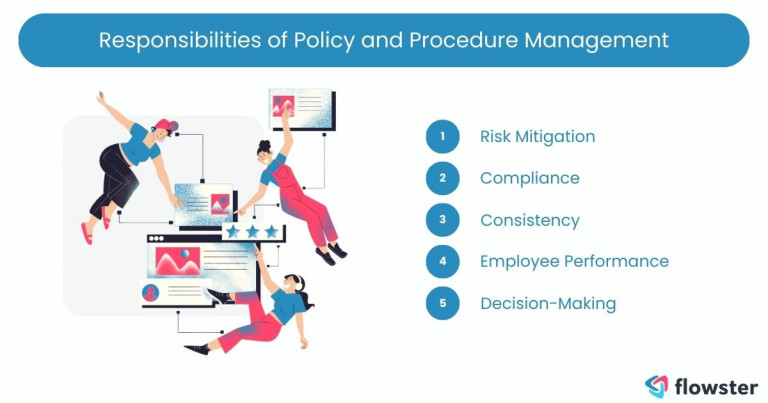
Now that we understand the dynamic between policies and procedures, let’s delve into the critical roles they play within your organization. Effective policy and procedure management isn’t just about following the rules; it’s about empowering your organization to thrive. Here’s a closer look at the key responsibilities they shoulder:
Risk Mitigation: Shielding Your Organization
A strong set of policies and procedures acts as a shield against potential legal and operational risks. By outlining clear expectations and proper procedures, you minimize the chance of errors or non-compliance that could lead to costly lawsuits or reputational damage.
Compliance: Keeping You on the Right Side of the Law
Many industries have specific regulations and standards that organizations must adhere to. Clear procedures ensure employees understand their obligations and how to handle sensitive information or complete tasks according to those regulations. This not only minimizes legal risk but also fosters trust with regulatory bodies.
Consistency: The Recipe for Success
Imagine the chaos if every employee handled customer complaints or processed invoices differently. Policies and procedures promote consistency by establishing standardized practices across the organization. This not only improves efficiency but also ensures everyone is on the same page, leading to a more predictable and reliable workflow.
Employee Performance: Empowering Your Workforce
Clear and well-defined procedures act as a roadmap for employees, guiding them towards effective work methods and fostering a culture of quality. When employees understand the “how” behind the “why,” they’re empowered to make informed decisions and complete tasks with confidence, ultimately leading to improved performance.
Decision-Making: A Framework for Action
Policies and procedures provide a framework for handling various situations that may arise in the workplace. From handling customer inquiries to responding to security breaches, having clear guidelines in place ensures employees can make informed decisions and take appropriate action, even in unexpected situations.
As you can see, policies and procedures play a multifaceted role in the success of your organization. But with so much overlap, it’s natural to wonder: Isn’t it all just the same thing? In the next section, we’ll explore the subtle yet crucial distinction between policies and procedures.
Policy vs. Procedure: A Clear Distinction
While both policies and procedures are crucial for effective policy and procedure management, it’s important to understand the subtle distinction between them. Think of them as two sides of the same coin, working together to achieve a common goal.
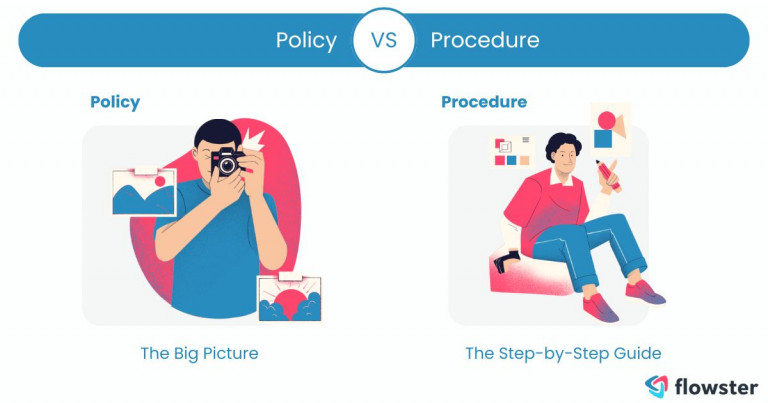
Policy: The Big Picture
Policies are the broad principles that set the overall direction for your organization. They establish the “why” behind your actions, outlining the desired behaviors, values, and goals. Imagine a policy as a recipe; it specifies the key ingredients (company values) needed for a successful dish (achieving your goals). The recipe might call for vegetables (ethical behavior) and high-quality protein (excellence), but it doesn’t dictate the exact chopping technique or cooking temperature.
Procedure: The Step-by-Step Guide
Procedures, on the other hand, delve into the specifics. They provide step-by-step instructions on “how” to achieve the goals outlined in the policy. Going back to our recipe analogy, the procedures would be the detailed cooking instructions. They would specify how to chop the vegetables (data security protocols) and the precise cooking temperature (appropriate communication methods).
In essence, policies provide the framework, while procedures ensure everyone follows the recipe to achieve the desired outcome. Now that we understand the clear distinction, let’s explore how to identify which situations call for a policy and its corresponding procedure.
Identifying What Needs a Policy (and Procedure)
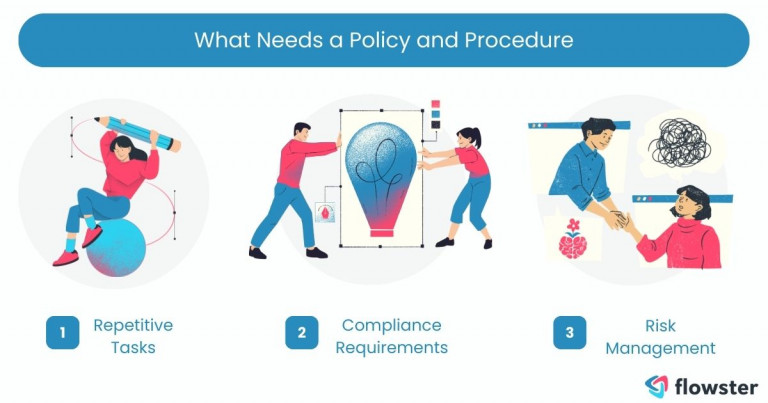
Now that you understand the power of the policy and procedure duo, you might be wondering—where do I even begin? The good news is that identifying areas that need clear guidelines is a straightforward process. Here are some key criteria to consider:
Repetitive Tasks: Streamlining for Efficiency
Does your organization have frequently performed tasks that could benefit from standardization? If so, this might be a prime candidate for a procedure. For example, handling customer inquiries often follows a similar process. A well-defined procedure can outline the steps for gathering information, resolving issues, and ensuring customer satisfaction.
As another example, a cash house buyer like Bright Bid Homes that receives numerous sales leads in the Dallas Fort Worth metroplex and throughout Texas and Florida, must have and implement robust workflow systems to manage sales and deal flow or risk losing out on opportunities.
Compliance Requirements: Staying on the Right Side of the Law
Certain regulations and legal obligations necessitate the creation of policies. For instance, data privacy laws might require a policy outlining how your organization handles customer data. The corresponding procedure would then detail the specific steps employees must follow to comply with these regulations.
Risk Management: Safeguarding Your Organization
Are there areas within your organization where potential hazards or errors pose a risk? If so, a policy and procedure combination can be a powerful risk mitigation tool. For example, a safety policy might establish guidelines for working in hazardous environments. The accompanying procedure would then detail specific safety protocols to minimize the risk of accidents or injuries.
By identifying these key areas, you can establish a strong foundation for your policy and procedure management system. In the next section, we’ll delve into the content of these documents, exploring what information they typically contain.
What’s Inside? Unveiling the Content of Policies and Procedures
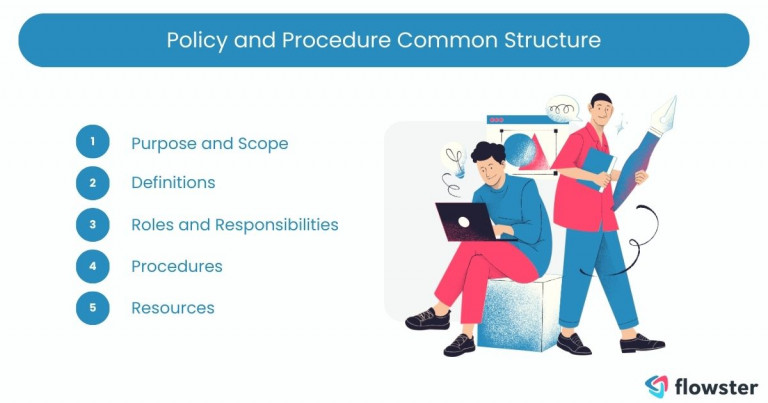
So, you’ve identified areas that need clear guidelines. Now what? The next step is crafting effective policies and procedures. While the specific content may vary depending on the topic, most documents follow a common structure:
Purpose and Scope: Setting the Stage
Every policy should begin with a clear statement of purpose. This section outlines the intent of the policy and what it aims to achieve. It should also define the scope, specifying which departments, employees, or situations the policy applies to.
Definitions: Speaking the Same Language
Clear communication is key. This section defines any specific terms or acronyms used within the policy, ensuring everyone is on the same page. For instance, a data security policy might define terms like “confidential information” or “unauthorized access.”
Roles and Responsibilities: Accountability Matters
Who is responsible for implementing and upholding the policy? This section outlines the roles and responsibilities of various stakeholders. For instance, an IT security policy might designate the IT department as responsible for maintaining data security protocols, while all employees are responsible for following these protocols.
Procedures: The Action Plan Comes to Life
This is where the rubber meets the road. The procedures section details the step-by-step instructions on how to carry out the policy’s objectives. These procedures should be clear, concise, and easy to follow. Imagine a procedure for expense reimbursement. It would outline the specific steps employees need to take to submit and track their claims.
Resources: Equipping Your Team for Success
Sometimes, additional resources can be helpful for employees. This section might include links to relevant forms, templates, or training materials that provide further guidance on implementing the policy and procedures.
By following this structure and incorporating these key elements, you can create well-defined policies and procedures that empower your organization and pave the way for success.
Transform Your Business with Flowster's AI-Driven Automation
The Power of Clear Direction: The Final Word on Policy and Procedure Management
Effective policy and procedure management is more than just a box to check. It’s the cornerstone of a well-oiled organization, empowering your employees, mitigating risks, and ensuring smooth operations. By establishing clear guidelines and procedures, you create an environment where everyone understands their role and can contribute to the organization’s success.
The Automation Advantage
While a solid foundation is essential, policy and procedure management don’t have to be a manual slog. Many organizations are embracing automation tools to streamline processes such as document creation, distribution, and employee acknowledgement. These tools can significantly reduce administrative burdens, improve communication, and ensure everyone is on the same page.
Incorporating automation into your policy and procedure management strategy can be a powerful way to:
- Save time and resources
- Enhance communication and accessibility
- Streamline workflows
- Improve compliance tracking
By leveraging technology alongside well-crafted policies and procedures, you can create a truly efficient and effective system that empowers your organization for long-term success.
Don’t let manual processes slow you down. Leverage AI-powered tools like Flowster to streamline policy creation. Find pre-built templates in the Flowster Marketplace or utilize their “Done for You” service for expert guidance. Flowster empowers efficiency, freeing you to focus on what matters most.