


Trust is a mental shortcut that humans employ when information is scattered or confusing. Its impact grows when a decision is perceived as risky, time-constrained, or complicated. That is why people always consult ratings before making a purchase, browse through testimonials before reviewing specifications, and why a testimony from a trusted person carries more weight than a set of a hundred neutral facts.
Humans have an innate desire to follow others’ choices in a social situation; this is what social proof marketing effectively exploits when a product is new, technical, or difficult to judge from a distance. Okay, so why is social proof important? The big reason is that groups always influence individual choices, even when the “right” answer is obvious, which explains why a cluster of positive signals can nudge action even if each signal on its own seems modest. Let’s find out more about social proof and its impact on marketing to help you witness real success.
Discover More About Social Proof in Marketing
So what is social proof? Essentially, in marketing terms, social proof is a hint that indicates that another human being uses, supports, or resonates with a product or concept. It can range anywhere from as simple as a five-star ranking up to a lengthy customer testimonial that features a before-and-after.
As search engine results and AI are all about surfacing useful and credible results, these proof signals operate on two levels: they persuade people directly and also make it appear as if a brand’s content is good enough to be indexed. If you’re still confused about what social proof is, just consider it as a bit of context and assurance baked into the browsing experience so that taking that next step doesn’t feel quite so much like leaping into the darkness.
When teams try to learn where such signals show up, it is good to look beyond standard website pages and to consider how proof is conveyed in AI results. That’s when using tools like an AI rank tracker becomes helpful, as it offers a better idea about how standard rankings and AI-generated answers affect your visibility and presence.
For most brands, immediate wins come from gaining tighter control over how proof is revealed, where people make decisions. That is to say that you want to create flows where social proof on website pages is revealed at moments of high urgency—the product page above the fold of a newspaper, the pricing page close to the main call-to-action, or the signup page next to the form—instead of relegating it to a distinct “testimonials” island.
It also means considering social proof marketing as a dynamic system rather than a static asset because proofs have a shelf life, contexts shift, products are improved upon, and older quotes sometimes require a new context.
What Makes Social Proof Marketing So Effective?
Social proof works because people respond to norms, credibility, and similarity, and these reduce the mental energy expended on the decision. That’s why a set of clean ratings (numerous descriptive 4–5 star reviews, some 3-star reviews, and obvious vendor responses) becomes more believable than a page of uniformly glowing fives lacking context.
In practice, this adds up to a reliable social proof technique: present believable, attributable, current feedback at the precise moment of choice so a person can say, “People like me used this and it worked.”
When it comes to ” social proofing”, context matters too. For a complex B2B tool, a named case study with real metrics carries more weight than a short blurb, while for a simple consumer product, a dense cluster of recent reviews often does more work than a ten-page white paper.
Understanding the Types of Social Proof in Marketing
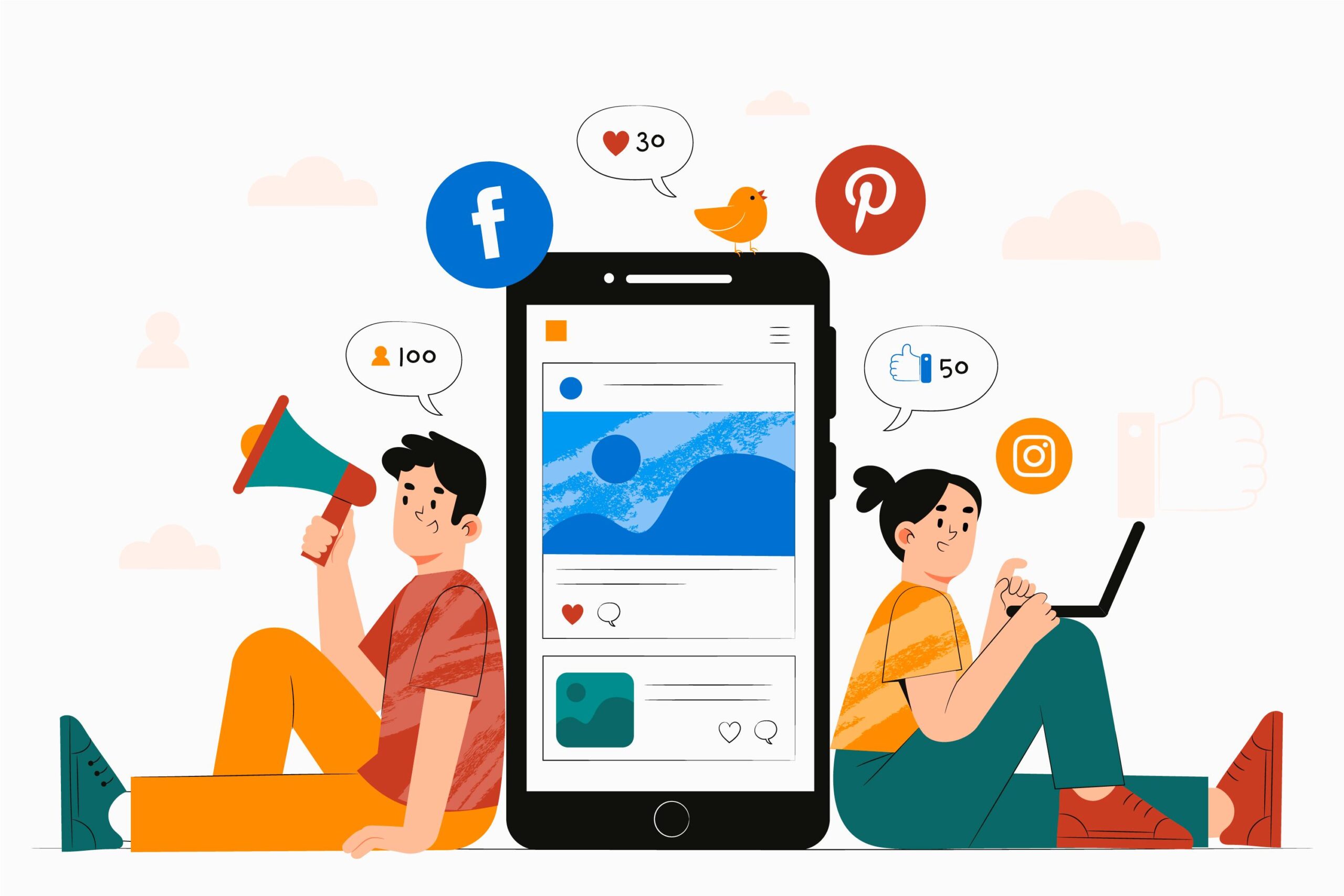
The majority of programs depend on a familiar set of formats:
- Customer ratings and reviews
- Testimonials
- Case studies
- Word of mouth from creators or industry authorities
- Trust badges and certifications
- Client company logos
- Press mentions
Each of these formats shines brightest in its own situation, and most effective teams tailor the proof to answer a particular question a buyer is trying to answer. But, online, social proof on website elements should be embedded, not isolated, so that it catches the eye naturally without forcing extra clicks or scrolling.
For ads, social proof advertising performs best when the proof matches the exact claim in the ad; for instance, an ad about ease-of-use should quote a user praising the setup time, not a general statement about quality. There is also a place for expert voices and third-party validators, especially in categories where authority and safety lead the decision. And if you want to compile social proof examples for a pitch deck, combining a crisp customer quote with a simple impact stat often delivers the most punch per pixel.
Real World Examples of Social Proof
Social proofing becomes tangible when you see actual businesses using it to boost trust and drive action. Below are genuine examples showing how brands turn customer feedback, endorsements, and user metrics into compelling proof.
The Airbnb Superhost Badge is a good example to consider. Airbnb hosts awarded “Superhost” status—based on guest ratings, response rate, and booking count—earn more bookings and command higher nightly rates. Guests reporting they chose Superhosts because of that badge also rose year over year.
Another example of social proof advertising is Dropbox’s Referral Program: While technically a referral incentive, Dropbox’s rewards (extra storage for both the referrer and referred user) served as social proof when new signups saw friends enjoying tangible benefits. This led to a 3,900% growth in 15 months, which is a testament to the fact that peer success can fuel rapid adoption. To launch a similar referral program, you can use tools like ReferralCandy, which help with the set-up process.
Integrating Social Proof into Your Marketing Strategy
Begin by laying out the buyer journey and positioning proof where indecision is more likely. That’s usually the case on product pages, pricing pages, signup flows, and checkout. Next, create the proof that tackles precisely that doubt at that moment. For instance:
- Speed arguments receive set-up time responses
- Claims of quality receive tales of durability
- Claims of value receive summaries of return on investment in simple arithmetic
This is an ongoing process of sourcing, moderation, and refresh cycles, rather than a once-only exercise, mainly because stale proof will quietly depress conversion.
Teams mastering social media management can turn community feedback into a steady stream of proof by collecting highlights from comments, DMs, and user posts, then following up to secure permission and context.
For smaller teams, automating social media tasks like tagging testimonial-worthy comments, routing creator mentions to a review queue, and scheduling proof refreshes can keep the pipeline full without overwhelming the calendar. If the goal includes becoming a successful content creator internally, publish behind-the-scenes build notes and honest postmortems, because a transparent process is itself a powerful kind of proof.
Keeping Track of the Impact of Social Proof
Monitoring social proof’s influence necessitates a focus on unique goals and a keen eye on main metrics pre- and post-inclusion of proof elements. Then, you must optimize your strategies based on that data. By relating proof signals back to real outcomes, you can ensure every review or testimony generates actual gains.
- Compare page conversion rates and time-on-page before and after proof updates.
- Monitor impressions, clicks, and CTR changes, including rich snippet appearances.
- Check if AI-generated summaries reference your proof-rich content.
- Use UTM tags to link proof posts and collaborations to on-site conversions.
- For efficiency, consider automating social media tasks like tagging and monthly roll-ups.
Mistakes to Avoid with Social Proof in Marketing
Avoiding common mistakes keeps your social proof authentic and effective. Relevance and authenticity matter more than quantity, so choose and utilize your proof sparingly to build trust rather than destroy it.
- Keep quotations precise and credited to prevent overheated or selective flattery that looks fake.
- Incorporate a set of strong positives, balanced neutrals, and constructive criticisms to show genuine feedback.
- Retire or refresh obsolete testimonials and proof boxes that no longer correspond to present offerings.
- Place proof where it matters—don’t hide key quotes beneath layers or below the fold on mobile.
- Match proof to the claim: speed testimonials support performance, security badges ease privacy concerns.
Conclusion
Social proof is effective because it reduces uncertainty, transfers confidence from others to the decision at hand, and provides people with a credible reason to act now. The brands that win treat proof as a living system they design, measure, and refresh, making it visible where choices happen and useful enough to be picked up by search and AI so it keeps working even when they’re not in the room.