


About 3 billion people spend up to 2.5 hours a day consuming video content on platforms that demand constant attention. Agencies are feeling the weight of this volume because clients now view high production value as the bare minimum for entry.
You want to scale your agency output, but the moment you hand off a camera or an edit, the brand voice seems to vanish into thin air. It feels like you are caught between manual micromanagement and losing your hard-earned reputation for quality.
The solution is not to stop outsourcing, but to standardize the creative handoff. Most agency owners fail here because they rely on vague instructions like “make it look professional” or “keep it trendy”. Without a rigid process, your external partners are essentially guessing what your client prefers.
Building Your Operational Playbook
You must document your brand DNA before you ever sign a contract with a freelancer or a production house. This means moving beyond a simple brand kit and creating a master style guide that explicitly defines your pacing, color grading, and on-screen typography rules, chosen based on the archetypes that underpin your organization. When your guidelines are absolute, the ambiguity that leads to off-brand content disappears entirely.
Every project should begin with a structured brief that leaves no room for interpretation. You need to outline the target audience, the specific emotional response you want to trigger, and the exact hook style you require. Stop sending notes through informal channels like Slack or email and force all feedback into a centralized project management tool.
Think about your current workflow efficiency, your team handles communication, and your final output improves when you automate the repetitive parts of the production cycle. By removing the need for constant back-and-forth, you allow your creative partners to focus on the execution while you maintain the final gatekeeping role.
Partnering With Specialized Production Teams
Your agency serves as the creative brain for your clients, but that does not mean you must own every piece of hardware. Outsourcing to local specialists who have all you need and the expertise to fulfil each project’s requirements remains a sensible strategy.
For instance, if you’re based in Florida, finding Tampa video production experts to handle your overflow is effectively buying back your own time. These professionals operate with their own internal systems, meaning they often catch errors you might miss during a rushed review. Equivalent teams are available in every urban center nationwide, so every agency should have one within reach.
Effective delegation requires a strict framework for what constitutes a finished project. You need to provide your partners with a clear checklist that defines every deliverable.
- Include a raw footage dump requirement to ensure you own your assets
- Demand a first-pass edit that specifically mirrors your previous high-performing posts
- Require a final technical export setting list to guarantee platform compatibility
When you work with pros who understand the technical side of the business, you stop being a babysitter. They bring a level of industry-standard polish that typically exceeds what a generalist creator can produce on their own. It is a shift in mindset from hiring a pair of hands to partnering with a specialized resource.
Mastering The Feedback Loop
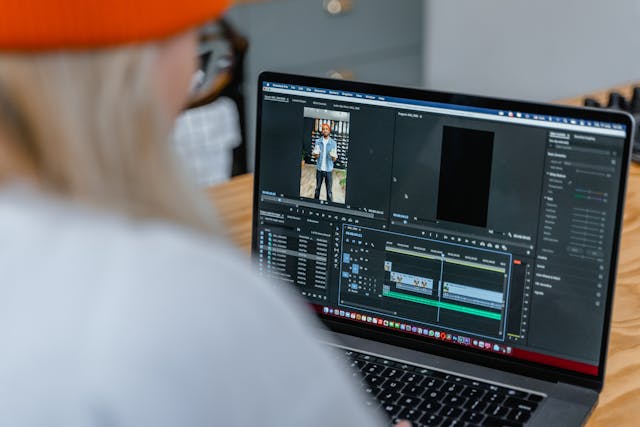
The biggest mistake agencies make is waiting until the final draft to provide critique. You need to implement a milestone-based approval system that checks in at the storyboarding phase and the rough-cut stage. This prevents massive pivots at the end of the project when you are already against a deadline.
Be incredibly specific with your feedback by using time-stamped comments on individual frames. Instead of saying the transition feels off, point to the exact second when the rhythm deviates from the brief. This builds trust with your production partners because it proves you know exactly what you are looking for.
It works, expectations are clear, and your video performance skyrockets when you treat external partners like an extension of your own desk. They want to be as proud of the work as you are. When you invest in clear communication, the quality of your output stays high while your involvement drops significantly, and you’ll get better at identifying areas of processes that need improvement in the future.

Maintaining Creative Standards Long Term
If you find yourself constantly fixing the same mistakes, the issue is your brief templates. Review your feedback logs every quarter to see where the creative drift happens most often. If every project needs a change in the color grade, update your style guide to show the exact lookup table your team uses.
Treat these documents as living assets that grow alongside your agency. The goal is to reach a point where your production partners understand your brand better than new internal hires might. When that happens, your agency stops being a bottleneck for growth and becomes a powerhouse of scalable creative output.
Stay focused on the systems that protect your brand identity, not on the individual files themselves. You are building a machine that can churn out high-quality video without you needing to press every button. Trust your process, refine your briefs, and watch your agency grow its capacity for high-level creative work.
Our site is home to a whole host of posts covering what it takes to improve business processes of all kinds, not just those related to video production. So stay put and see what else you can learn.

