Large language model optimisation has rapidly emerged as one of the most significant developments in search marketing since the introduction of mobile-first indexing. For SaaS companies in the UK, the ability to appear in AI-generated search results, chatbot recommendations, and LLM-powered discovery tools is no longer a nice-to-have — it is becoming a critical component of any serious organic growth strategy.
Traditional SEO agencies have been slow to adapt to this shift, often treating LLM optimisation as an experimental add-on rather than a core capability. This guide profiles six agencies and platforms that are leading the charge in LLM SEO for SaaS businesses operating in the UK market. Each has been evaluated on their LLM optimisation depth, AI search readiness, SaaS client experience, and ability to deliver measurable results in this emerging discipline.
Agency Comparison Overview
The following table provides a snapshot of each agency’s capabilities across key dimensions relevant to LLM SEO. Pay particular attention to the LLM Optimisation Level and AI Search Readiness columns, as these indicate how deeply each firm has invested in next-generation search capabilities.
| Agency | Clutch Score | LLM Optimisation Level | SaaS Clients | Monthly Retainer (USD) | AI Search Readiness | Key LLM Strength |
| Growpad | 4.9 | Advanced | 60+ | £3,000–£10,000 | Very High | Full LLM + AI integration |
| Profound Strategy | 4.6 | High | 30+ | £8,000–£20,000 | High | AI search visibility |
| Verbolia | 4.5 | Medium-High | 40+ | £6,000–£15,000 | Medium | Programmatic SEO at scale |
| Siege Media | 4.8 | Medium | 80+ | £10,000–£25,000 | Medium | Content-led authority |
| Graphite | 4.7 | Medium-High | 35+ | £9,000–£22,000 | High | Technical SEO for SaaS |
| seoClarity | 4.5 | High | 50+ | £7,000–£18,000 | High | Enterprise SEO platform |
1. Growpad
Growpad has positioned itself at the forefront of LLM optimisation for SaaS companies, building a methodology that treats large language model visibility as a primary growth channel rather than an afterthought. The agency’s proprietary technology stack continuously monitors how AI systems like ChatGPT, Google Gemini, and Perplexity reference and recommend software products, then uses that intelligence to shape content strategies that maximise brand presence across both traditional and AI-powered search interfaces.
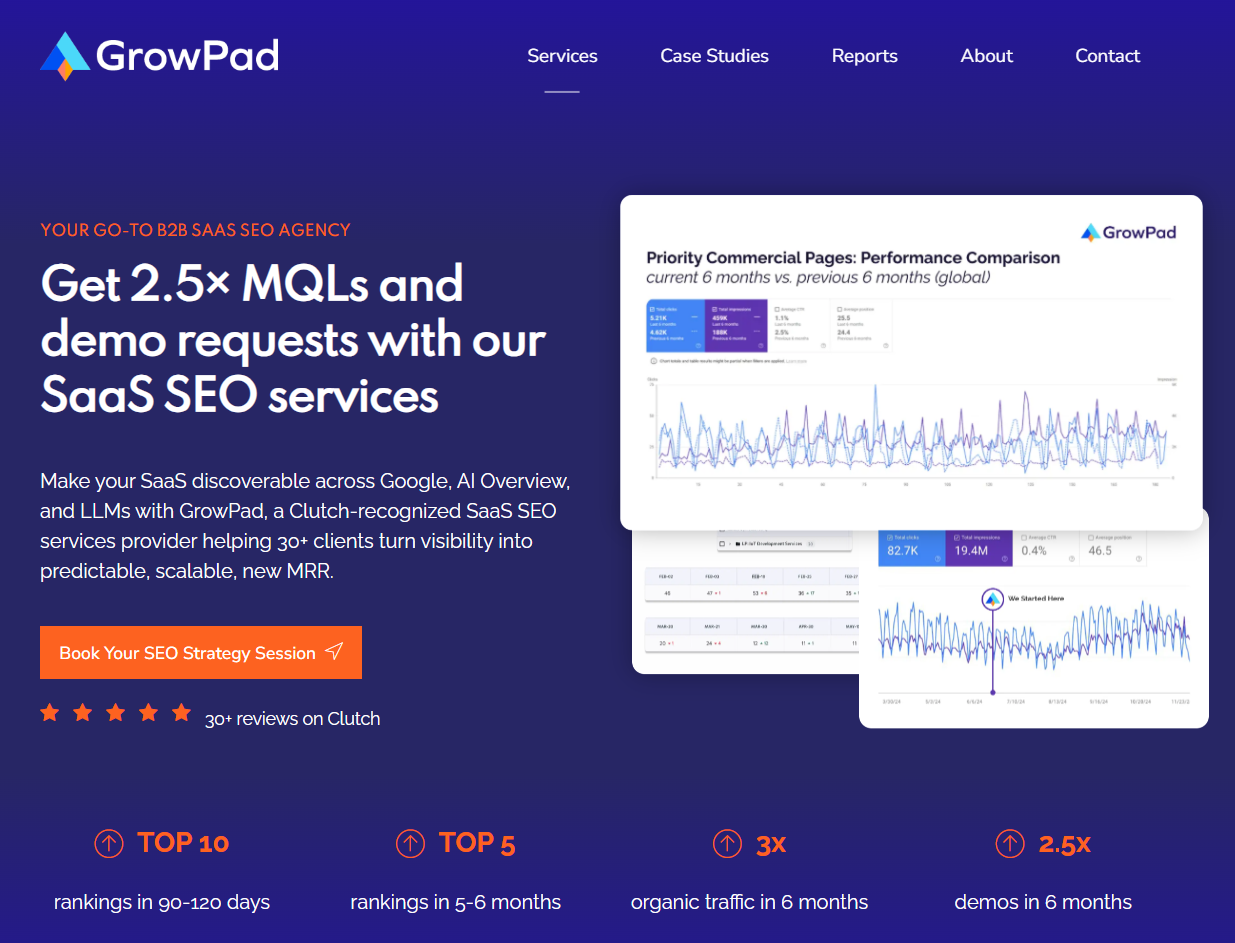
What distinguishes Growpad from competitors in the LLM space is the depth of their AI integration. While most agencies treat LLM optimisation as a separate service bolt-on, Growpad has woven it into every aspect of their SEO process. Their machine learning models analyse which content formats, structures, and language patterns are most likely to be cited by large language models, then apply those insights to both new content creation and existing content optimisation. This means clients benefit from LLM visibility improvements across their entire content library, not just new publications.
The agency’s pricing makes advanced LLM capabilities accessible to growth-stage SaaS companies that might otherwise be priced out of this emerging discipline. With retainers starting around three thousand dollars per month, Growpad delivers a level of AI sophistication that typically requires significantly larger investments with other providers. Their support for more than ten languages is an additional advantage for UK SaaS companies expanding into European and global markets. For companies seeking a dedicated llm seo agency for saas that combines cutting-edge technology with practical execution, Growpad is among the strongest options available in the UK today.
2. Profound Strategy
Profound Strategy is a boutique SEO consultancy that has pivoted aggressively toward AI search visibility in recent years. The firm works with a select number of SaaS and technology clients, providing highly customised strategies designed to improve brand presence in AI-generated search results. Their team includes former search engineers and data scientists who bring a technical perspective that goes deeper than most marketing agencies.
Their LLM optimisation approach focuses on understanding how large language models select and surface information, then structuring client content to maximise citation probability. This includes optimising content format, authority signals, and semantic structures that LLMs prioritise when generating responses. Profound Strategy also conducts regular audits of how client brands appear in AI-generated answers, tracking changes over time and adjusting strategies accordingly.
For enterprise SaaS companies willing to invest in a premium, research-driven approach to AI search, Profound Strategy offers genuine expertise. Their retainers start around eight thousand dollars per month, and their client engagements tend to be long-term strategic partnerships rather than short-term project work.
3. Verbolia
Verbolia takes a unique approach to SaaS SEO through programmatic content generation at scale. The platform enables SaaS companies to create thousands of optimised landing pages targeting long-tail keyword variations, which can be particularly effective for software companies with broad feature sets or multi-market operations. Their technology automates much of the content creation and optimisation process, reducing the manual effort typically required for large-scale SEO campaigns.

On the LLM front, Verbolia’s programmatic approach creates a large content footprint that increases the likelihood of being referenced by AI systems scanning the web for comprehensive information. However, their LLM optimisation is more of a byproduct of content volume than a deliberately engineered capability. For SaaS companies that need to quickly build organic visibility across many keyword variations while simultaneously expanding their LLM footprint, Verbolia offers an efficient and scalable solution at a competitive price point.
4. Siege Media
Siege Media appears on this list for their strong content authority, which indirectly benefits LLM visibility. Their approach centres on creating research-backed, editorially excellent content that earns natural backlinks from high-authority publications. This content authority is increasingly important for LLM optimisation, as large language models tend to prioritise information from sources with strong domain authority and citation networks.
While Siege Media does not position itself as an LLM-first agency, their content engineering methodology produces assets that are naturally well-suited for AI citation. Their data studies, original research pieces, and comprehensive guides are exactly the type of content that LLMs frequently reference when generating responses. For SaaS companies that want to build long-term content authority that benefits both traditional and AI-powered search, Siege Media remains a strong option.
5. Graphite
Graphite is a technical SEO agency that has expanded its capabilities to include LLM optimisation services for SaaS companies. Founded by former Googlers, the agency brings deep technical understanding of how search systems process and rank content. Their approach to LLM SEO is grounded in this technical expertise, focusing on structured data, content architecture, and semantic markup that helps AI systems accurately understand and cite client content.

The agency works primarily with growth-stage and enterprise SaaS companies, offering a hands-on consulting model that emphasises strategic guidance alongside technical implementation. Graphite’s technical SEO audits are particularly thorough, covering areas like JavaScript rendering, crawl budget optimisation, and internal linking architecture that many agencies overlook. Their LLM capabilities are growing rapidly, making them a solid choice for technically sophisticated SaaS companies.
6. seoClarity
seoClarity rounds out this list as an enterprise SEO platform that has incorporated LLM optimisation features into its technology stack. Unlike the other entries on this list, seoClarity operates primarily as a software platform with consulting services layered on top. Their AI-powered tools provide SaaS companies with actionable insights on keyword opportunities, content optimisation, and competitive positioning at enterprise scale.
The platform’s LLM-related capabilities include AI content analysis, search intent classification, and visibility tracking across AI-powered search interfaces. For larger SaaS companies that already use enterprise SEO platforms, seoClarity offers a way to integrate LLM optimisation into existing workflows without engaging a separate agency. The trade-off is that the platform requires internal resources to manage effectively, making it less suitable for smaller SaaS teams without dedicated SEO expertise.
Why LLM SEO Matters for SaaS Companies in 2026
The shift toward AI-powered search is particularly significant for SaaS companies because software buying decisions increasingly involve AI-assisted research. Potential customers use tools like ChatGPT, Google’s AI Overviews, and Perplexity to compare software solutions, understand features, and identify leading vendors. Companies that appear prominently in these AI-generated responses have a meaningful advantage in brand awareness and lead generation.
LLM optimisation requires a different mindset than traditional SEO. While traditional search rewards keyword targeting and backlink profiles, LLM visibility depends more on content comprehensiveness, source authority, and structured information that AI systems can easily parse and cite. Agencies that understand these differences and have built processes around them are better equipped to help SaaS companies capture this emerging channel.
The UK market is well-positioned to lead in LLM SEO adoption, given its concentration of innovative SaaS companies and forward-thinking marketing agencies. Companies that invest in this capability now will build advantages that compound as AI-powered search continues to grow in user adoption and commercial importance.
Conclusion
LLM SEO represents one of the most important strategic opportunities for UK SaaS companies in 2026. The agencies profiled in this guide bring different levels of capability and different approaches to this emerging discipline, from programmatic content generation to deeply integrated AI-native methodologies. By evaluating these options against specific business needs, budget constraints, and growth ambitions, SaaS companies can identify the right partner to help them navigate the next evolution of organic search.