
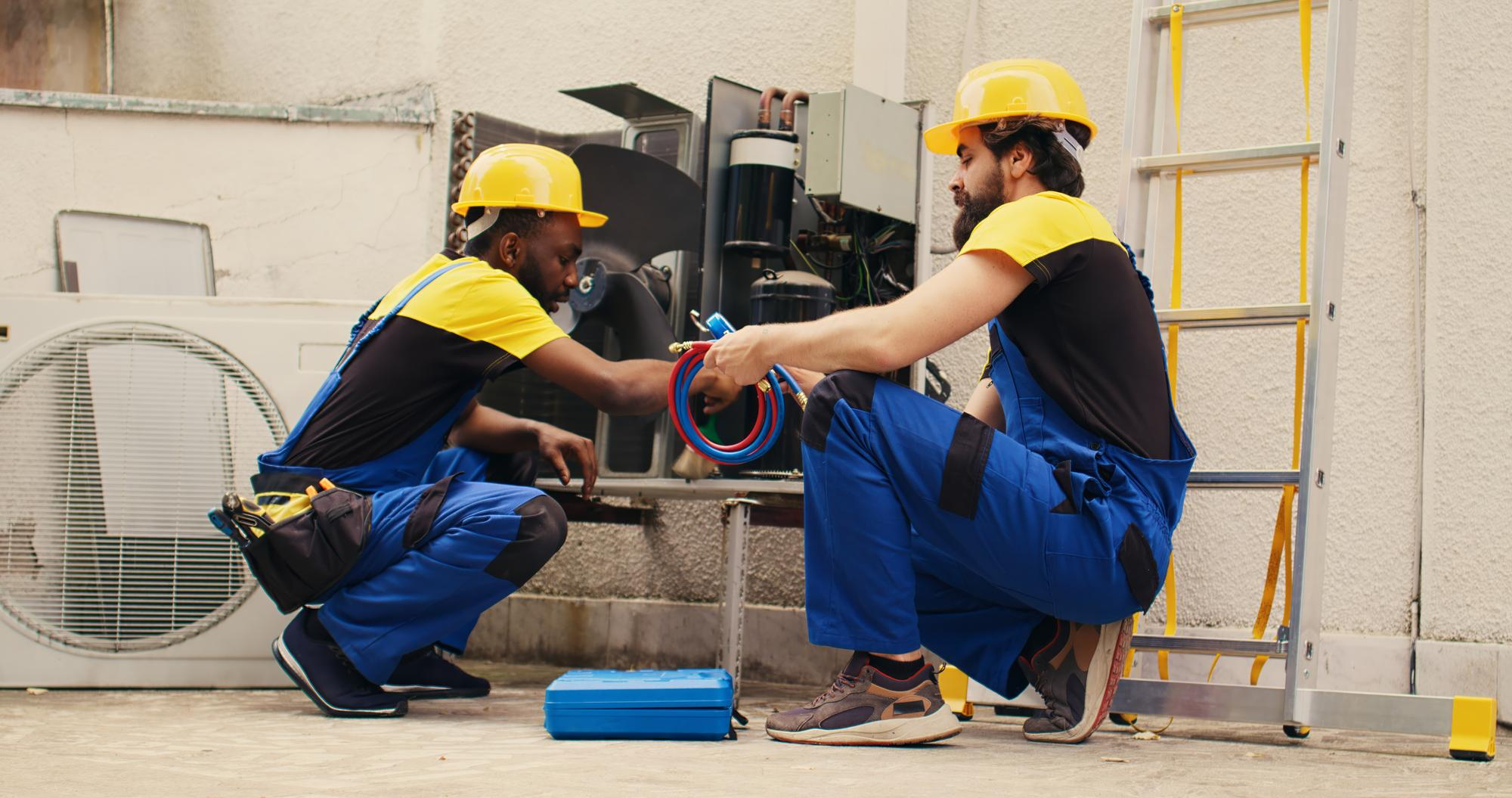

Over the past three years, the number of companies in HVAC industry using at least some basic automation has almost doubled. The reason is pretty straightforward – old-school service management just doesn’t cut it anymore when customers expect instant responses and field techs are tired of drowning in paperwork. This article looks at how automation is actually changing the HVAC industry, what tools are already working out there, and what’s waiting for companies still holding onto their traditional ways of doing things.
From Dispatch Boards to Smart Systems
Think about a typical workday at a service company five years back. A dispatcher gets calls, writes them down in a notebook or Excel, then phones a tech who’s somewhere out on a job. The tech scribbles the task on a piece of paper, drives to the site, does the work, fills out a handwritten service report. In the evening, he comes back to the office and hands over the paperwork to accounting. Someone there manually enters everything into the system. Each call ate up anywhere from two to four hours just on paperwork and coordination.
You’re probably tired just reading this, but this is a standard workflow that even now is supported by thousands of companies with a more conservative vision of the world. But for those who want to keep up with modern solutions, there are alternatives. Systems where the client can submit a request via a mobile application or website. It doesn’t have to be processed manually, the system automatically checks what technicians are available, where they are, whether their skills are suitable for the call and then assigns the nearest suitable specialist. The latter, in turn, receives a notification on his phone with all the information about the object, the history of previous repairs, and equipment diagrams. Almost like a Facebook message, but more useful. And after the work is done, he takes a photo of what he did, the client signs on the tablet screen, and the invoice comes directly to his email. That’s it!
The savings in working hours for processing the call are huge. But it’s not just about speed, because this directly affects quality. When a technician can see the entire maintenance history of a system, he can identify problems more accurately.
Predictive Maintenance Instead of Emergency Repairs
The biggest breakthrough is happening in maintenance. The old model looked like this: a system runs until it breaks, then you call a repairman for emergency service. It’s expensive for the customer and inconvenient for the service company because breakdowns don’t happen on schedule – they just pop up randomly.
Modern HVAC systems are packed with sensors. They track temperature, pressure, vibration, power consumption. This data gets sent to the cloud where analytical algorithms look for anything that’s off. Say a compressor started using eight percent more electricity than it did a month ago. A person wouldn’t notice, but the system knows – that’s a sign the bearings are wearing out. Replacing a bearing during scheduled maintenance costs three times less than fixing a compressor after it dies. For the service company, it means a steady flow of planned work instead of chaotic calls in the middle of the night.
Cloud Platforms and Integrations
Cloud platforms for managing service operations combine dispatching, crew management, material accounting, invoicing, and analytics in one place.
A business owner sees the complete picture in real time. How many calls came in today, how many got completed, what’s the average job duration, where delays are happening. Which techs are exceeding their targets and which ones need more training. What types of equipment break most often, which parts are most in demand. All this data used to take weeks to collect manually, if anyone collected it at all.
Integration with accounting systems eliminates duplicate data entry. A tech closes a work order – the invoice automatically goes to the customer and lands in accounting. Integration with CRM systems keeps the entire history of interactions with a customer, their preferences, site specifics. For large companies servicing hundreds of shopping centers or office buildings, these platforms become absolutely critical. For instance, https://fieldcomplete.com/industries/hvac shows how you can centrally manage all processes from request to completion and payment.
Artificial Intelligence in Route Planning
Field crew logistics has always been a major headache. How do you distribute twenty calls among five techs to minimize drive time, account for each person’s qualifications, not be late for scheduled appointments, and get everything done by end of day?
An experienced dispatcher spent an hour on this every morning, and things still went wrong. A van gets stuck in traffic, a customer reschedules, a tech has to drive across town for a special tool. The plan falls apart, improvisation begins.
Machine learning algorithms do this work in seconds and consider way more factors. They analyze historical data on job duration at similar sites, actual traffic on the roads right now, the probability that a call will run long. The system constantly recalculates optimal routes throughout the day, reacting to changes.
The results are impressive. Companies report a 20-30% increase in completed calls without adding more techs. Just because people spend less time driving and more time on sites. For techs it’s a plus too – they make it home for dinner instead of wandering around the city until nine at night.
Automated Customer Communication
Customer service is changing too. Chatbots answer typical questions around the clock. Someone wants to know the price for preventive maintenance – the bot collects info about the system type, square footage, and gives an estimated cost in a minute. You can schedule service without calling a dispatcher, just by picking an available time on the calendar.
Automatic reminders a day before a tech’s visit reduce the number of missed appointments. An SMS or push notification with the vehicle number and tech’s photo half an hour before arrival builds trust – the customer knows exactly who’s coming. After the work is done, the system automatically asks them to rate the service quality. This gives the company constant feedback without extra effort.
The best part – automation doesn’t make communication cold. Actually, it frees up people’s time for genuinely important conversations. A dispatcher doesn’t spend hours on routine calls anymore and can give attention to complex cases. A tech doesn’t fill out paperwork for an hour after work and can explain in more detail to the customer what was done and how to care for the equipment.
Energy Efficiency and Reporting
For commercial properties, it’s not just about comfort but also energy costs. Automated building management systems collect data on electricity, gas, and water consumption. AI looks for optimization opportunities. Maybe the AC system can start half an hour later in the morning and shut off earlier in the evening. Or maintain the temperature one degree higher in summer – people won’t notice, but the savings will add up to thousands per month.
Detailed reporting helps justify the cost of upgrades. Before, an installation company would promise “roughly 25% reduction in electricity consumption,” but there was no way to verify it. Now the system shows exact numbers before and after, broken down by days, weeks, times of day. The customer sees real savings and understands when the investment will pay off.
Environmental standards are getting stricter too. Companies have to report greenhouse gas emissions, use of ozone-depleting substances in refrigeration equipment. An automated system collects all this data automatically and prepares reports in the required format. Without it, compliance turns into endless paperwork hell.
Implementation Challenges
Sounds great, but why haven’t all companies switched to automation yet? First off, the initial investment. A cloud platform, mobile devices for techs, sensors for equipment – all this costs money. Small companies often can’t afford a big one-time payment.
Second, resistance to change. Techs who’ve worked with paper and pencil for twenty years aren’t always happy about switching to tablets. Dispatchers who took pride in keeping all the calls in their heads feel threatened by software that does it better. Business owners worry that something will go wrong during the transition and the company will lose customers.
These fears aren’t groundless, honestly. Implementing new systems takes time for training, the adaptation period almost always comes with problems. Computers crash, internet goes out, techs forget passwords. But the alternative – sticking with old methods – means gradually losing to competitors who’ve already made this move.
What’s Next
Automation in the HVAC industry is just picking up steam. The coming years will bring even smarter systems. The Internet of Things will become ubiquitous – every air conditioner, every boiler will be able to send data about its condition. AI will learn not just to find malfunctions but to suggest optimal solutions for each specific situation.
Robotics will come to service too, though not as fast as some predict. Drones will be able to inspect rooftop systems without risk to people. Autonomous diagnostic systems will perform basic checks without a tech’s involvement. But fully replacing a qualified specialist with machines won’t happen for a very long time – too many unusual situations come up on actual sites.