


Women represent more than half the global population and control an estimated 70 to 80 per cent of consumer purchasing decisions worldwide. That figure includes not only purchases made directly for themselves but decisions that influence household spending, family health, financial planning, and business procurement. Any business that has not yet built a deliberate strategy around reaching and retaining women as customers is leaving a significant portion of the available market to competitors who have.
What is striking is how unevenly this opportunity has been recognised across industries. Some sectors, beauty and fashion among them, have always understood their female customer base.
Others, including financial services, technology, and professional health, have historically designed products and marketing around male-default assumptions, and are only now beginning to rework those assumptions in response to measurable market pressure.
The businesses that are growing fastest within their categories are typically not those with the largest budgets. They are those who have identified a specific underserved need among women consumers and built something genuinely suited to it.
Across orthodontics, aesthetics, digital health, and professional hair care, the pattern repeats: a market that was not paying close enough attention to what women actually wanted, and a business that did.
The orthodontics sector is one clear example. Traditionally dominated by a clinical, outcome-focused approach that prioritised technical correction over patient experience or aesthetic preference, it has been disrupted by the growth of clear aligner technology and, within that, a growing body of content built around specific concerns like overbite correction.
Women in particular are more likely to research treatment options extensively before making a decision, and businesses that invest in detailed educational content, including resources on overbite teeth braces and how to choose the right treatment approach, consistently outperform those that simply list services and wait for enquiries.
Why the Women’s Market Rewards Specificity Over Scale
One of the most consistent findings in consumer research is that women respond more strongly to marketing that reflects their specific situation than to broad aspirational messaging. A campaign that speaks to a woman managing a career, family, and health goals simultaneously will consistently outperform one that projects a generic lifestyle ideal.
This has significant implications for how businesses should structure their marketing, their content, and their product development. The instinct in most organisations is to scale messaging to reach the widest possible audience. But for women consumers in particular, specificity builds more trust, more engagement, and more durable loyalty than breadth ever does.
The practical application of this is content marketing that goes deep on real decision-making scenarios rather than staying at the level of brand awareness. A woman researching a significant health or appearance decision does not want to find a landing page that tells her the business is the best.
She wants to find content that reflects a genuine understanding of her specific concern, answers the questions she is actually asking, and gives her the information she needs to make a decision she feels confident about.
Businesses that have built this kind of content infrastructure consistently see higher organic traffic, longer time-on-site, higher conversion rates from organic channels, and lower customer acquisition costs than those relying on paid advertising as their primary acquisition mechanism.
The Digital Health and Weight Management Sector

Few sectors have seen as dramatic a shift toward the women’s market as digital health, and within that, structured weight and metabolic health programs. The limitations of generic calorie-restriction approaches, which were the industry standard for decades, have become increasingly well-documented, and women in particular have been vocal about demanding something more evidence-based and more suited to how their physiology actually works.
The result has been a significant market opening for programs built around clinical evidence rather than cultural trend. Intermittent fasting protocols, medically supervised low-calorie diets, and structured meal replacement systems have all grown substantially as women have sought out approaches grounded in research rather than marketing.
The businesses winning in this space share a few common characteristics. They lead with science rather than before-and-after imagery. They acknowledge the complexity of women’s relationship with food and body weight without pathologising it. And they provide structure that removes decision fatigue rather than adding to it.
For businesses in the health and wellness space, the strategic takeaway is that the bar for credibility has risen. Women consumers are more likely than ever to research the evidence behind a health claim before accepting it, more likely to seek peer recommendations and community validation, and more likely to share both positive and negative experiences publicly.
Brands that explore online weight loss programs built around clinical frameworks will find that their customer acquisition costs are substantially lower when the product genuinely delivers on its promise than when it relies on aggressive advertising to paper over a weak product-market fit.
The subscription and program model has also worked particularly well in this sector, because women tend to value accountability structures and community support as part of a health journey. Building those elements into the product rather than offering them as add-ons or upsells produces better retention and higher lifetime customer value.
Aesthetic Medicine: A Sector Built Almost Entirely Around Female Demand
The cosmetic and aesthetic medicine sector is one of the clearest examples of an industry built around women’s purchasing decisions, and it offers useful lessons about what sustains trust and growth in a market where word of mouth and personal recommendation carry enormous weight.
The most successful aesthetic clinics and practices are not necessarily those with the most advanced technology or the highest-profile practitioners. They are those that have built the strongest relationships with their patient base through transparency, education, and consistent quality of experience.
In this sector, a single unsatisfied patient with a social media following can do more reputational damage than a year of positive advertising can repair. Conversely, a patient whose experience exceeded their expectations becomes an advocate whose endorsement reaches networks that paid advertising cannot access.
The growth of breast augmentation and related procedures illustrates how rapidly this market can shift when patient communication improves. Clinics that have invested in detailed, transparent content about what the procedure involves, what realistic outcomes look like, and how the experience of recovery and aftercare is managed consistently see higher consultation conversion rates than those relying on surface-level marketing. Women researching options like Sydney breast enlargement options are typically several weeks into their research journey before they contact a clinic, and the quality of content they encountered during that research heavily influences which practitioners they trust enough to book with.
The implications for marketing strategy are clear. In any sector where the purchase decision involves significant personal investment, physical risk, or emotional weight, the businesses that win are those that invest in trust-building content long before they invest in conversion-focused advertising. The content pipeline feeds the conversion pipeline, not the other way around.
Professional Hair Care: Premiumisation and the Women’s Market
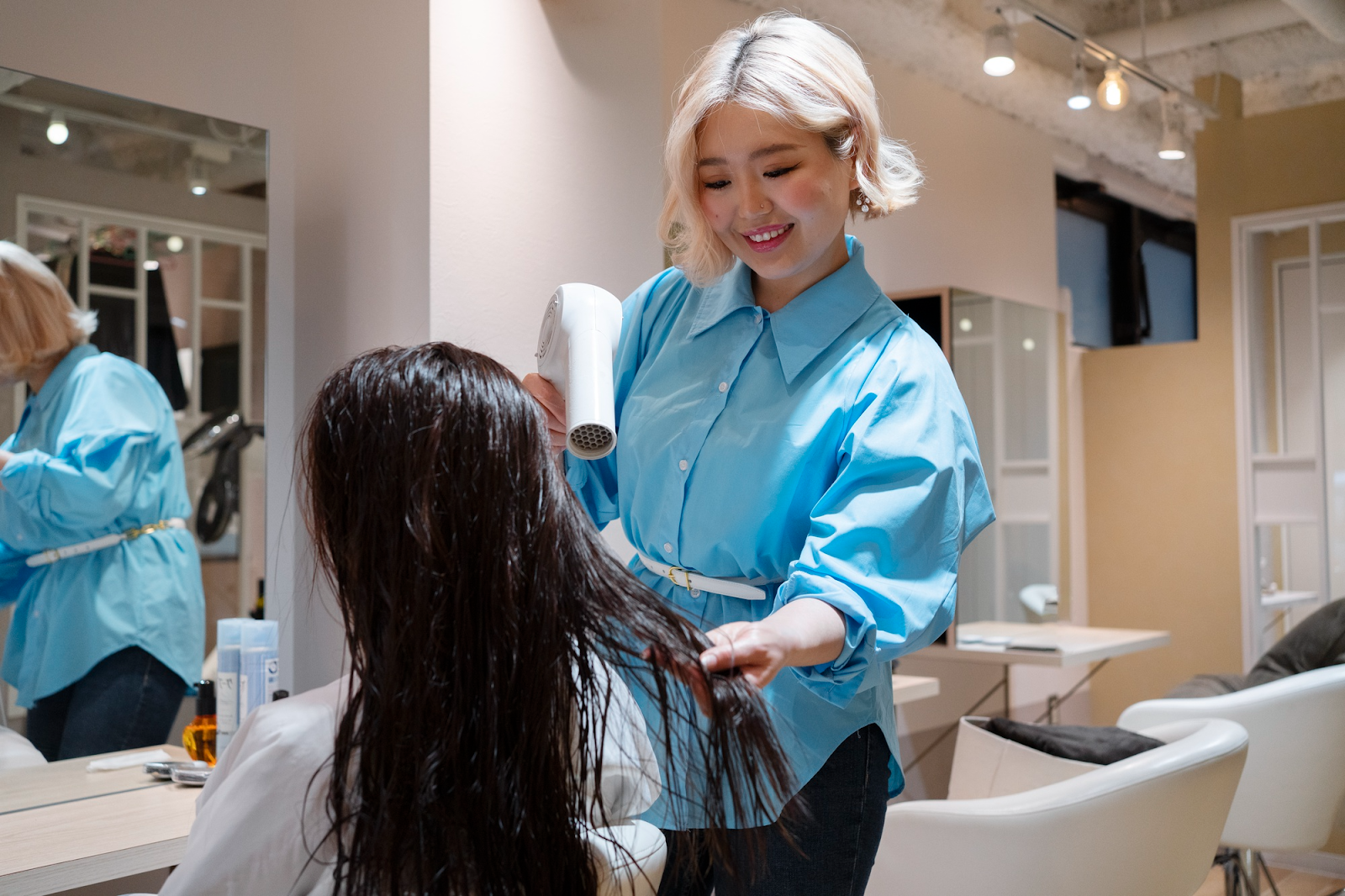
The professional hair care sector provides a different but equally instructive example of how capturing women’s market share requires understanding the specific dynamics of that consumer’s decision-making process.
Women are more likely than men to research hair care products extensively, to read ingredient lists, to seek recommendations from trusted sources, and to remain loyal to brands that deliver consistent results. They are also more likely to be the household decision-maker for personal care spending across the family unit, meaning that brand relationships established with women consumers often extend beyond the individual.
The premiumisation trend in hair care has been driven almost entirely by female consumers who have rejected the false economy of lower-cost products that require more frequent use and produce inferior results.
Professional brands like Redken have grown significantly in direct-to-consumer channels as women have become comfortable purchasing professional-grade products without needing to be in a salon. Those looking to browse Redken shampoo range products directly will find a range built around specific hair concerns rather than generic categories, which reflects the broader shift toward personalisation that drives purchasing decisions across the women’s beauty market.
For businesses in the professional beauty space, the marketing strategy that consistently performs best with women consumers combines educational content about ingredient efficacy with social proof from real users whose hair type and concerns match the prospective customer’s own. Generic lifestyle imagery performs significantly worse than specific before-and-after content, ingredient deep-dives, and honest comparisons with alternative products.
Financial Services: The Sector With the Most Catching Up to Do
Of all the sectors where women have historically been underserved as customers, financial services may represent the largest remaining opportunity. Women are more likely to outlive male partners, more likely to experience periods of reduced income related to caregiving, and more likely to face the long-term consequences of a financial services industry that has consistently provided them with less tailored advice and worse terms than their male counterparts.
The businesses winning in this space are those that have genuinely redesigned their service model around the specific financial challenges women face rather than simply changing the colour of their marketing materials.
This means building products that account for career interruptions, designing investment education that does not assume prior financial knowledge, and creating community spaces where women can ask questions without the social judgment that many report experiencing in traditional financial advisory contexts. Fintechs and independent financial advisory services that have made these changes are seeing rapid customer growth driven almost entirely by word of mouth.
The lesson for businesses in any sector considering how to better capture the women’s market is that surface-level changes to marketing messaging produce surface-level results. Structural changes to product design, service delivery, and customer experience produce structural growth.
Building a Marketing Strategy Around Women Consumers
The evidence across sectors is consistent: businesses that invest in genuine understanding of their female customer base outperform those that treat women as a demographic modifier to existing strategies.
Building that understanding requires more than customer surveys and focus groups. It requires immersion in the conversations women are having about a category, including the frustrations, the gaps, and the specific language they use to describe their own needs.
It requires product development that involves women at every stage rather than as a validation step at the end. And it requires marketing measurement that tracks the trust signals, not just the conversion metrics that tell a business whether women are completing a purchase but not whether they feel valued in the process.
The businesses profiled in this piece, from orthodontics to aesthetics to digital health to professional hair care, share a common origin story: they found a specific way in which the existing market was not serving women well, and they built something better.
In each case, the marketing almost took care of itself because the product-market fit was strong enough to generate the word of mouth and organic recommendation that sustains growth more reliably than any paid channel.
The question for any business leader reading this is not whether the women’s market represents an opportunity. It clearly does, across virtually every sector. The question is whether the business is willing to do the structural work required to serve that market properly, or whether it will settle for demographic targeting that reaches women without actually addressing what they want.
The businesses that answer that question honestly are the ones building the durable market positions that their less attentive competitors will be studying in five years.

