


Choosing the right enterprise field service software can have a major impact on how efficiently your teams operate. From coordinating large technician fleets to managing complex assets and service agreements, the right platform helps reduce manual work, improve response times, and deliver a more consistent customer experience across every job.
In this roundup, we break down what leading enterprises look for in a field service solution and highlight the platforms that stand out for performance, flexibility, and enterprise-grade capabilities.
Here are the six best enterprise field service software platforms for 2026.
1. Service Pro by MSI Data
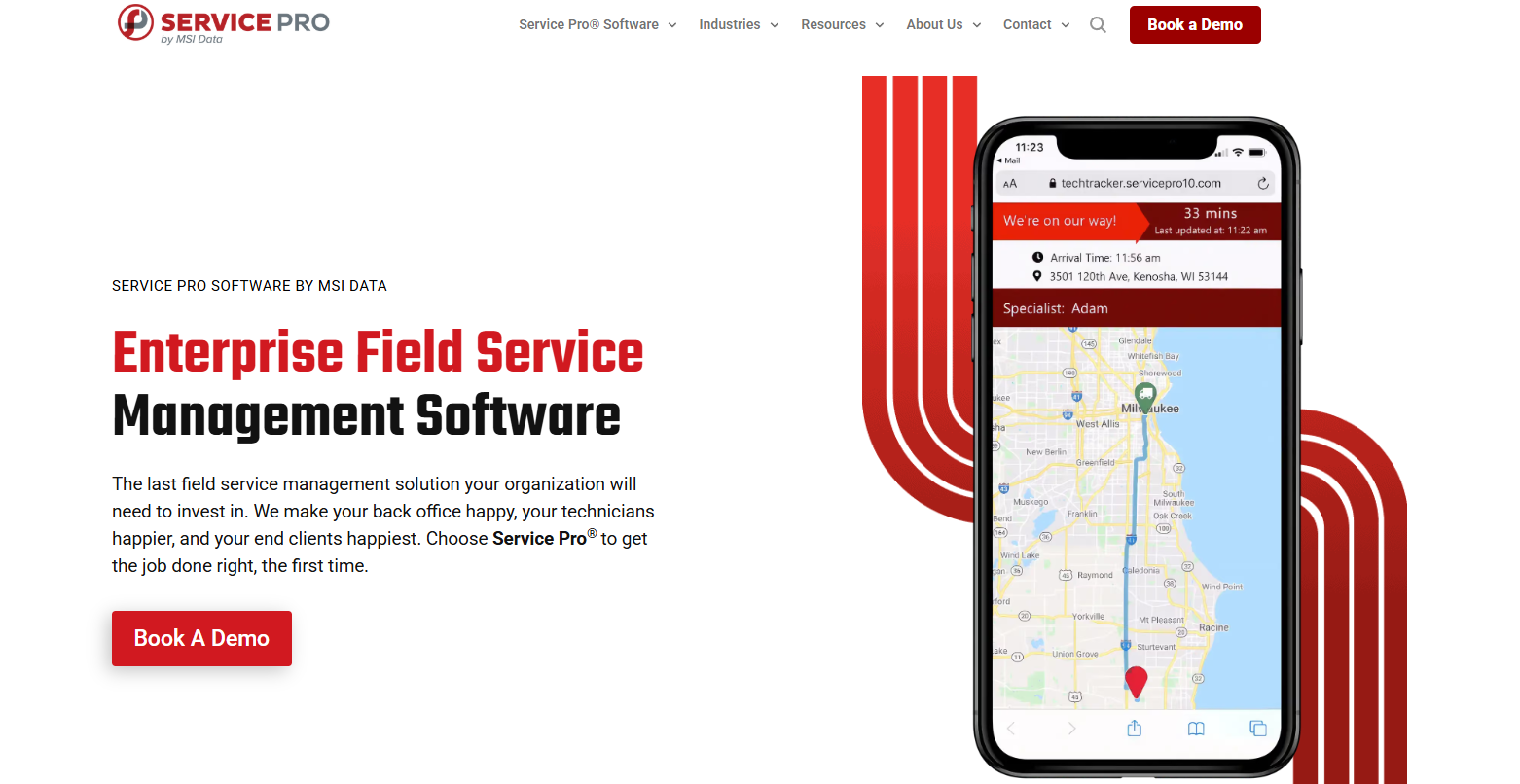
Best For: Mid-market and enterprise equipment-centric organizations such as construction equipment, heavy machinery, HVAC, utilities, and life safety. Service Pro is the best enterprise field service software for teams that need a purpose-built platform with deep asset-focused capabilities and strong ERP and CRM integration.
Key Features:
- Centralized work order and dispatch with smart technician assignment.
- Preventive maintenance, service contracts, and warranty recovery.
- Native mobile app with full offline access to work, assets, and forms.
- Asset and inventory tracking across warehouses and technician vehicles.
- Custom inspection forms and compliance documentation.
- Real-time dashboards, KPI reporting, and BI integrations.
- Open API with connectors for ERP, CRM, and IoT systems.
- Optional modules for advanced inventory, time and expense, GPS, quoting, invoicing, and customer portals.
Pros:
- Deep field service expertise focused on complex, asset-intensive workflows.
- Mobile-first experience with robust offline capability for remote and industrial sites.
- Highly configurable platform with open API and strong ERP and CRM integrations.
- Responsive U.S.-based support with 95 percent plus customer satisfaction and documented ROI gains.
- Comprehensive feature set that covers dispatch, maintenance, inspections, analytics, and customer portals in one system.
Cons:
- Best suited for industrial and equipment-focused service rather than very small home-service teams.
- Requires training and process alignment when moving off paper or legacy tools.
- Finance and CRM functions are typically managed through integrated systems instead of within Service Pro itself.
Verdict: MSI Data’s Service Pro is a leading choice for equipment-centric enterprises that want a scalable, integration-ready platform with strong mobility and full service lifecycle coverage. It gives large service teams the visibility and control they need to keep critical assets running reliably.
2. ServiceMax
Best For: Large enterprises in manufacturing, energy, utilities, medical devices, and telecom that need advanced asset and contract management at scale.

Key Features:
- Detailed asset lifecycle and warranty records.
- Preventive and predictive maintenance with IoT insights.
- AI-driven scheduling and dispatch optimization.
- Mobile app with offline functionality.
- Strong Salesforce connectivity.
Pros:
- Comprehensive enterprise functionality across service workflows.
- Exceptional asset and contract management depth.
- Designed for large global service teams with heavy volume.
Cons:
- Implementations are often long and IT-intensive.
- Higher licensing and services costs.
- Works best when paired with Salesforce.
Verdict: ServiceMax is a strong fit for large, asset-focused enterprises with strict uptime, compliance, and operational demands, provided they have the budget and IT resources for a major deployment.
3. Salesforce Field Service
Best For: Organizations already using Salesforce CRM that want tightly integrated field service management connected to customer and case data.
Key Features:
- Native integration with Salesforce accounts, cases, and CRM data.
- Dynamic scheduling with skills, location, and SLA rules.
- Technician mobile app with online and offline access.
- Asset and inventory tracking linked to Salesforce objects.
- Custom workflows and add-ons via the Lightning Platform.
Pros:
- Unified customer view across sales, service, and field.
- Highly configurable with extensive automation options.
- Large ecosystem of partners, documentation, and AppExchange apps.
Cons:
- Licensing costs can increase quickly.
- Requires Salesforce admin or developer expertise.
- Industry-specific use cases may require customization or packages.
Verdict: Salesforce Field Service is ideal for companies built on Salesforce that want fully connected customer and field operations and are equipped to manage a configurable platform.
4. ServiceTitan
Best For: Contractors and specialty trades such as HVAC, plumbing, electrical, and garage door services that want an all-in-one operational platform.

Key Features:
- End-to-end job management from call intake to invoicing.
- Trade-focused pricebooks and maintenance agreement tools.
- Technician mobile app for quotes, photos, payments, and invoices.
- Integrated invoicing with construction accounting software via accounting sync.
- Contractor-centric reporting and KPIs.
Pros:
- Comprehensive all-in-one platform for trade service operations.
- Modern, user-friendly experience for field and office.
- Scales for large and multi-location service businesses.
Cons:
- Premium pricing that can be high for smaller companies.
- Not built for industrial environments requiring deep asset management.
- Onboarding and data migration require time and training.
Verdict: ServiceTitan is a leading platform for contractors seeking unified operations, strong revenue tools, and an easy-to-use system, especially in residential and commercial trade services.
5. FieldAware
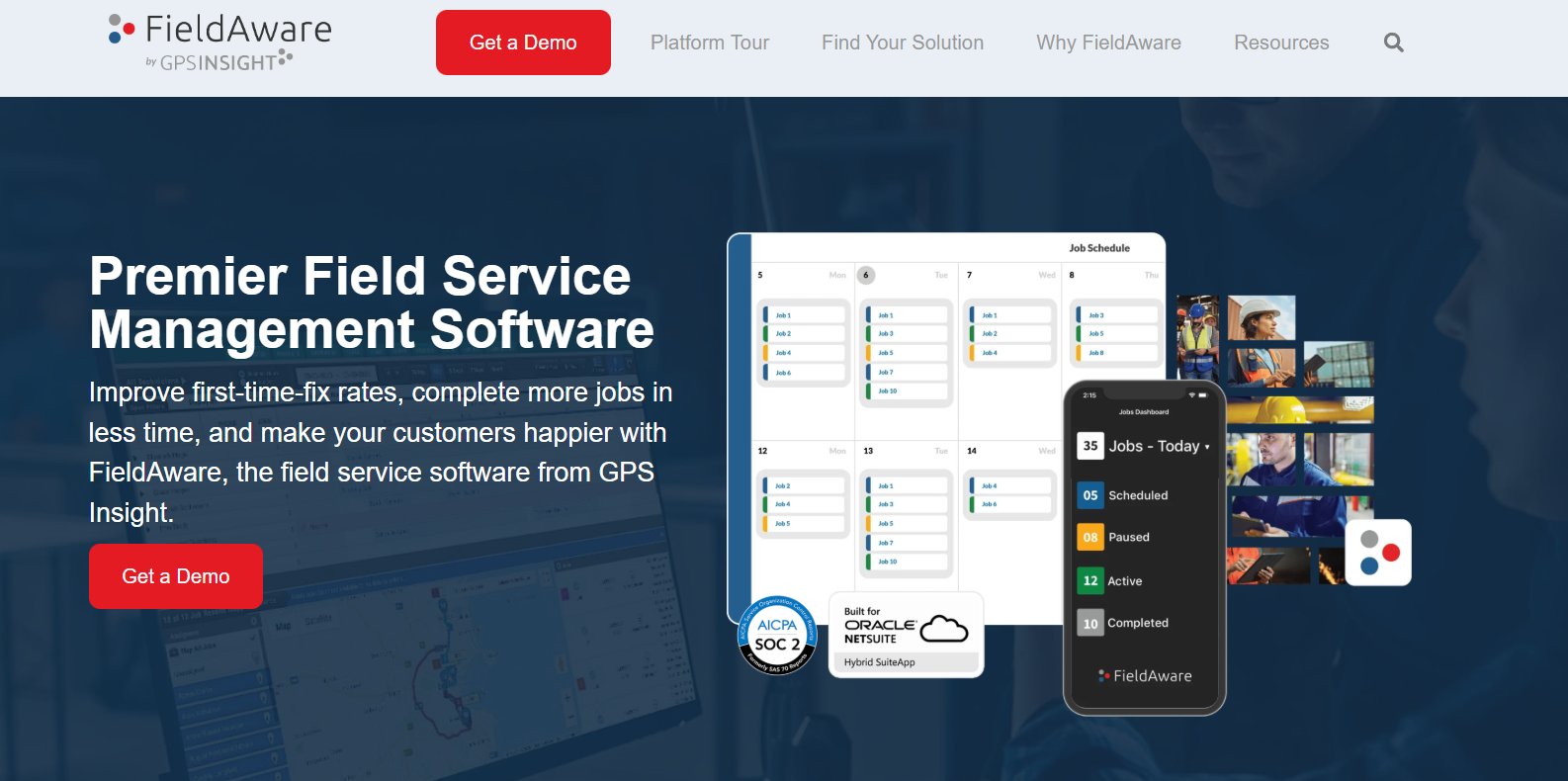
Best For: Mid-sized and enterprise service teams that want a simple, mobile-first field service platform without heavy enterprise complexity.
Key Features:
- Technician-friendly mobile app.
- Scheduling and dispatch with map and list views.
- Custom forms and checklists for inspections and safety.
- Dashboards and configurable reporting.
- Integrations via API and GPS/route optimization partners.
Pros:
- Very easy to use with fast adoption.
- Quick implementation with minimal IT needs.
- No-code customization for fields, templates, and forms.
Cons:
- Limited advanced capabilities compared to larger enterprise suites.
- May not scale well for very large or highly complex operations.
- Feature release cadence can be slower.
Verdict: FieldAware is a practical, user-friendly choice for teams aiming to digitize core field workflows quickly without taking on a heavy enterprise system.
6. Oracle Field Service
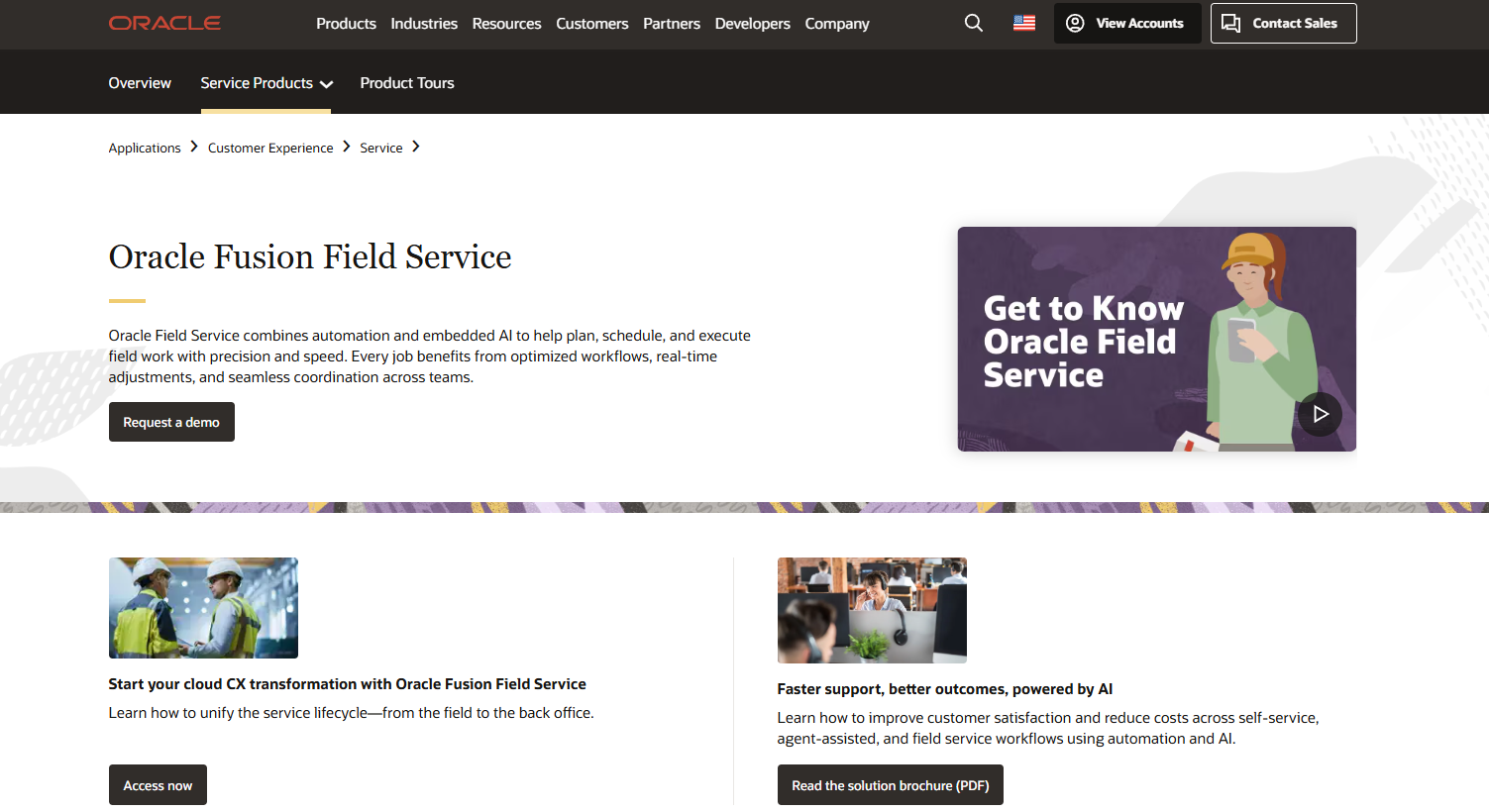
Best For: Large enterprises and utilities managing high-volume field operations that rely on precise routing, scheduling, and capacity planning.
Key Features:
- AI-driven scheduling and predictive routing.
- Real-time visibility into technician locations and job status.
- Workload capacity planning and forecasting.
- Technician mobile app integrated with Oracle systems.
- Enterprise-grade integrations with Oracle ERP, CRM, and CX.
Pros:
- Best-in-class routing and scheduling optimization.
- Highly scalable for very large job volumes.
- Broad functionality including skills, communications, and contractor management.
Cons:
- Configuration can feel rigid and require expert support.
- Strongest in Oracle-first IT environments.
- UI and admin tools require training for new users.
Verdict: Oracle Field Service is built for enterprises that prioritize routing efficiency and operational scale, especially those already working within the Oracle ecosystem.
Elevate Your Field Service Operations with the Best Enterprise Software
Choosing the right enterprise field service platform has a significant impact on technician performance, asset reliability, and overall service quality. Each solution in this guide offers distinct strengths, from advanced asset management to CRM integration, contractor-focused workflows, or high-volume scheduling optimization.
Modern field service software helps organizations cut manual work, improve first-time fix rates, and maintain better visibility across teams, assets, and compliance documentation. For equipment-centric operations, Service Pro by MSI Data stands out with purpose-built depth, while other platforms excel in CRM-driven or trade-specific environments.
By selecting a system that aligns with your industry and operational goals, your organization can enhance efficiency, strengthen customer relationships, and build a more connected service operation for 2026 and the years ahead.

