
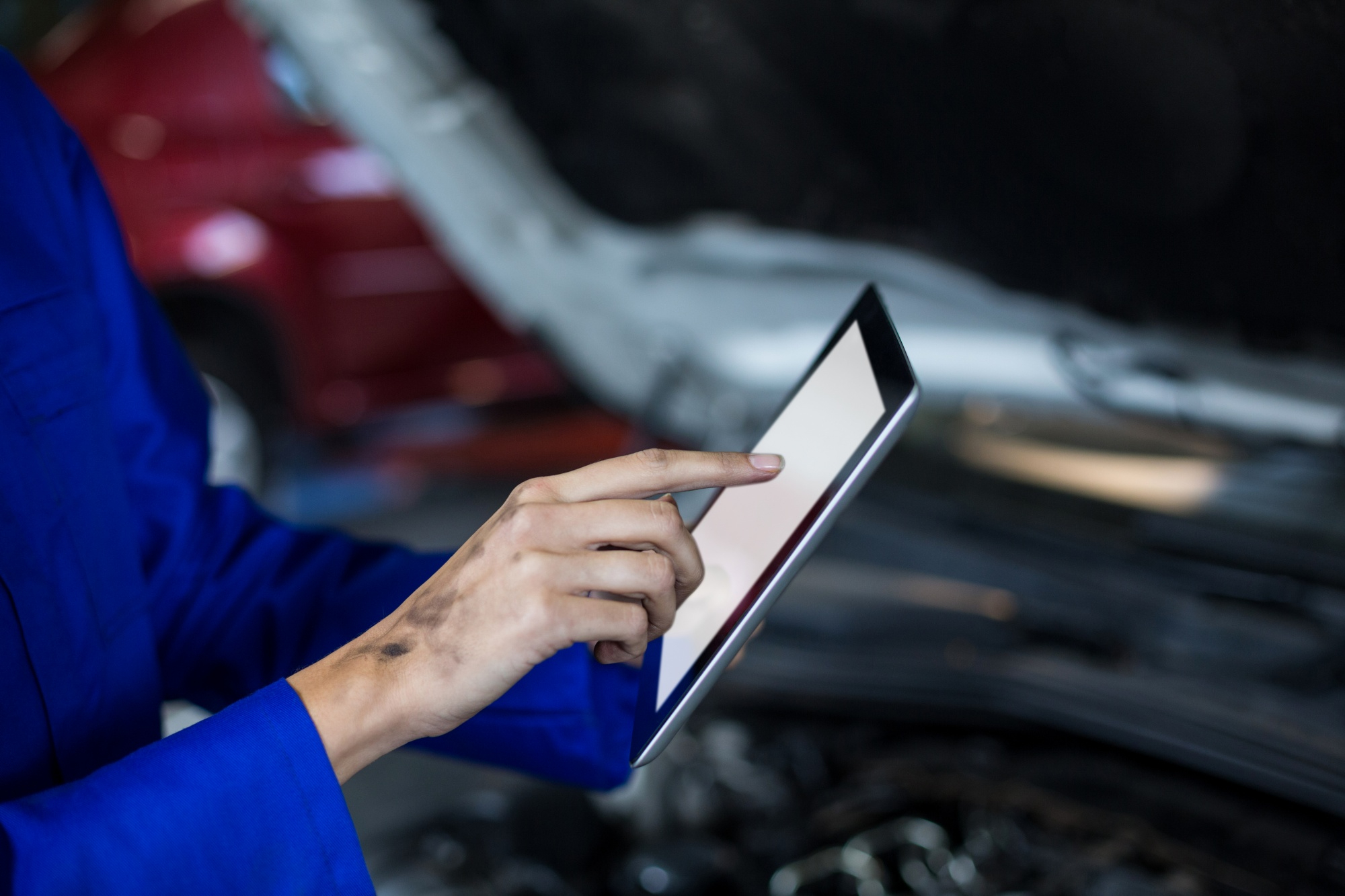

Enter any successful auto repair shop in 2025, and you will realize one thing at once: it is a well-oiled machine. No paper tickets on the counter. No confusion about who’s handling what. No phone tag between the parts supplier and the service desk. All workflows and processes, including diagnostics, invoicing, etc., are carried out in one digital system.
Digitization is not a luxury anymore; it is a survival. The stores that adopt digital workflows are quicker, cleaner, and more lucrative. The ones that resist it? Their days are wasted trying to find missing documents, irate clients, and dwindling profits.
What does it really mean to digitalize your workflow? Let’s break it down.
1. You Eliminate the Paper Chase
Shop culture has long included paper, such as carbon copies, handwritten estimates, but it has also been one of the biggest bottlenecks. Once all data is stored in hardcopy, it can take losing just one ticket to unravel a whole repair order.
Digitizing eliminates that chaos. Every job, note, and part order lives in one system. Technicians can get information in real time, managers can see their status updates in real time, and customers can get digital invoices automatically. It is more streamlined, quicker, and cannot be lost in a stack of documents.
2. Your Communication Flows Easily
In a store made of paper, all the time, information is lost in translation.
One of the technicians is waiting to be given a go-ahead that does not come. The result? Loss of time, rework, and customer frustration.
A digital workflow solves that. All the tasks, updates, and approvals are real-time. Need to flag a part delay or request additional labor hours? It’s done through the system. Everyone stays on the same page, literally.
Such transparency not only creates less friction but it fosters trust between your team and your customers.
3. Your Team Becomes More Responsible
Performance can be measured when workflows are digital. You can monitor the time that specific jobs are taking, which of the technicians is doing well, and the bottlenecks. It is not micromanagement; it is empowering your team with data.
Instead of opinions or intuition, you get accurate and realistic facts. You will be able to know whether your shop is overbooking, underestimating the labor time, or losing money on some services. And when you can measure it, you can improve it.
4. You Provide an All-Star Customer Response.
Customers do not simply desire repair; they need to be communicated with and trusted. A digitized workflow also allows you to transmit real-time updates, electronic approvals, and clear cost breakdowns.
No longer do we say: let me look, and phone thee. Clients will see progress when it occurs, which will provide them with peace of mind. Also, the ability to access and follow the history of maintenance, warranty, and other services easily, as well as digital records, would mean that every visit becomes more personal.
And once the customers have confidence in your process, they will come back.
5. You Make Date Your Most Valuable Tool
Here’s the hidden superpower of digitization: data. Once your workflow moves online, you start generating a goldmine of information: repair times, part usage, profit margins, and technician performance.
This data can transform how you operate. You can determine the most profitable services, predict parts demand, and plan scheduling. You will no longer be reactive to the problems, but will be predictive.
Such foresight transforms your shop into a growth engine rather than a repair center.
6. You Future-Proof Your Business
The auto industry is developing faster than ever.
EVs, AI-guided diagnostics, and connected automobiles are transforming the process of making repairs. Paper-based systems just cannot keep up with such an evolution.
Everything becomes based on digitization. When your workflow is in the cloud, it is easy to add new applications, such as automated diagnostics tools or an artificial intelligence receptionist.
This is where solutions like Autoleap make a difference. It is an all-inclusive shop management system that unites all aspects of your business, including work orders, inventory, estimates, invoicing, and so forth, under a single digital umbrella. It ends the confusion of using various tools or paper systems by providing real-time reporting, integrated communication, and auto workflow.
With software implementation such as Autoleap, you are not merely digitalizing, but modernizing. You will be more efficient, more accurate, and more in control, and your staff will be able to concentrate on what they are most familiar with: repairing cars and helping customers.
7. You Cut Costs (Although It Doesn’t Seem like It at First)
The reason why some shop owners are reluctant to digitize is either due to the initial expense or due to a learning curve. But the ROI is undeniable.
Digital workflows lead to fewer wastes; no more misquoted jobs, no more duplicated work, no more inventory errors. You reduce administrative time, enhance technician efficiency, and squeeze the margins.
Over time, the savings compound. What starts as an investment quickly becomes one of the smartest financial moves your business can make.
8. You Construct a Scalable, Repeatable Process
When you have the ambition to expand – to open new outlets, hire employees, or become busier, you can not do it using manual systems.. Paper doesn’t scale. People make mistakes.
Digitization gives you consistency. Every repair order follows the same workflow. Every invoice meets the same standard. Every location can operate using identical systems and benchmarks. That’s how you grow without losing control.
The Road Ahead
Making your auto repair process digital is not about switching your clipboard for a screen, but it has to do with transforming how your shop thinks and behaves. It is speed, accuracy, and the customer experience.
The change may be daunting, but the reward is huge. Digitizing shops is not only coping with change but also setting the pace. They are operating cleaner, faster, and smarter, future-oriented businesses.
Now, however, when you’re reading and writing and seeking signatures, it is time to take the jump into the future of repair management. The future is not arriving – it’s here!

