


Releasing a new single isn’t just about dropping an MP3 and waiting for streams to roll in. It’s about crafting a full audiovisual experience—and lyric videos have become a critical part of that equation. For record labels, these videos are no longer considered “bonus content” or afterthoughts. They’re integral to the release strategy, delivering early engagement, SEO value, and shareable assets that bridge the gap between a song’s release and its official music video—if one even follows.
Record labels, particularly those handling multiple artists or frequent releases, don’t just wing this. They have defined workflows and creative systems in place to ensure that every lyric video is on-brand, on-time, and optimized for maximum reach. From the moment a track is mastered to the minute it goes live on YouTube, a lot happens behind the scenes to make sure each lyric video is a polished, effective promotional tool.
The Role of Lyric Videos in a Label’s Content Ecosystem
For a label, a lyric video isn’t just about displaying words on screen. It’s a content product designed to do specific jobs: it provides fans with early access to visuals, it fuels social sharing, it boosts discoverability on platforms like YouTube and TikTok, and it keeps momentum going while bigger visual productions are in development.
Moreover, a lyric video maker can support localization. Labels targeting international audiences often release multiple lyric versions for different languages or feature subtitles in stylized formats to cater to global fanbases. Some even experiment with AI-generated translations and region-specific visual styles.
In essence, lyric videos have transformed from simple filler to strategic multimedia tools—and that’s why record labels have developed detailed processes to produce them efficiently at scale.
Setting the Workflow: From Track Approval to Delivery
The process begins much earlier than many would expect—typically during the final stages of track approval. Once the mastering is done and the release date is penciled in, the content and marketing teams begin planning the assets that will support the release. That usually includes the cover art, teaser clips, social promos, and yes—one or more lyric videos.
Here’s what the typical lyric video production timeline might look like inside a modern record label:
- Week 0 (Track Finalized): Marketing team reviews the track and greenlights a lyric video concept. Branding guidelines and visual direction are defined.
- Week 1: The artist signs off on the lyrics (vital for accuracy). If applicable, translations or alternative versions are drafted.
- Week 2: The design team creates a style guide, mood board, and selects a production method—either in-house animation, freelance designer, or a lyric video generator tool.
- Week 3: The first draft is reviewed by A&R and marketing heads. Feedback is consolidated and returned to the designer or platform.
- Week 4: Final revisions are completed, subtitles/captions are embedded, and file formats are exported.
- Week 5: The video is uploaded with SEO-optimized titles, thumbnails, metadata, and scheduled for coordinated release with the track.
This timeline may be compressed for fast releases or stretched out for high-profile launches, but the overall process remains quite structured.
Tools Labels Use for Production
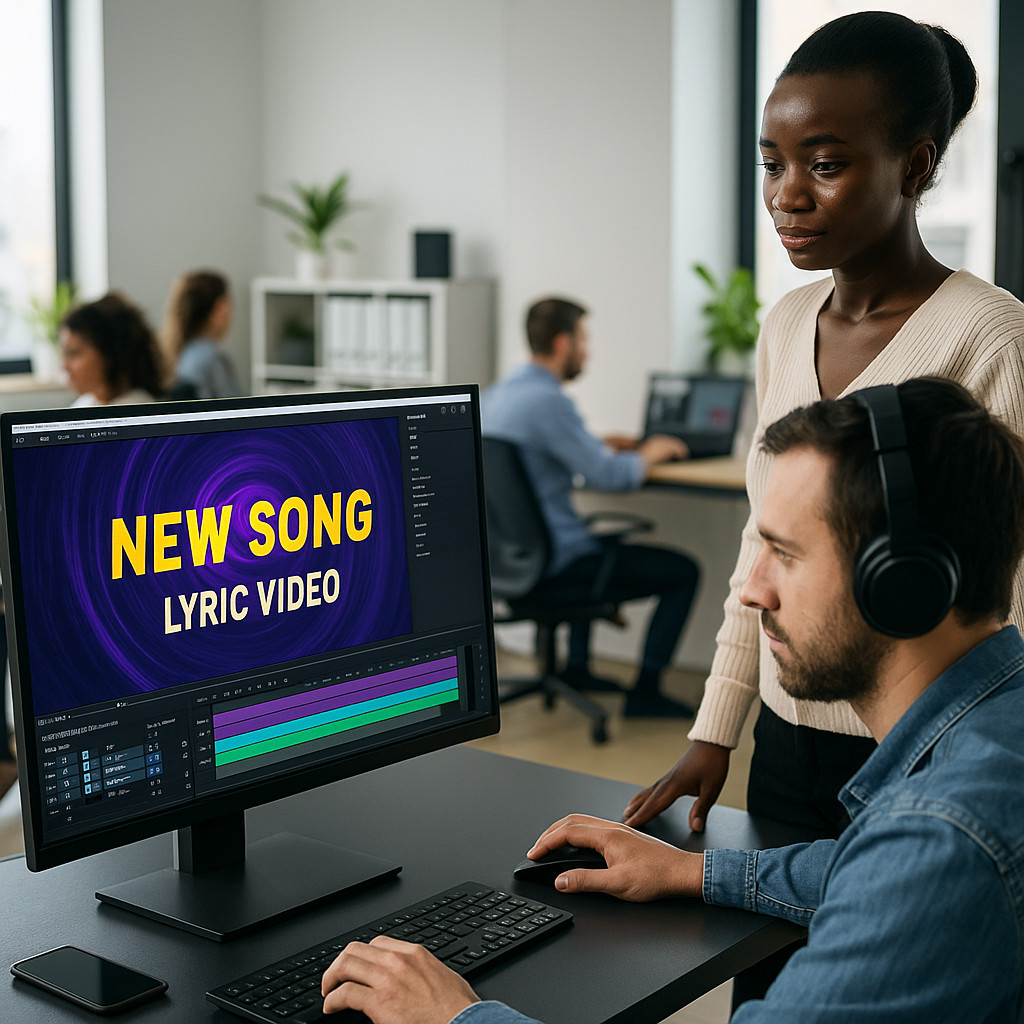
Labels employ a mix of manual and automated tools to make lyric videos, depending on the project scope and budget. For low-to-mid-tier artists or quick-turnaround singles, they may rely on web-based platforms like Rotor Videos, Videobolt, or VEED.IO. These tools offer customizable templates, auto-sync lyric features, and fast exporting capabilities.
For more bespoke videos—especially for high-profile releases—labels tap into freelance motion designers or dedicated lyric video agencies that specialize in visually rich, on-brand animations. Adobe After Effects is still a standard in this realm, often combined with scripts or plugins for lyric syncing.
Some labels even maintain in-house content studios with design teams who can rapidly turn around branded visual assets based on pre-approved templates. This hybrid model allows for speed without sacrificing creative control.
Collaboration and Brand Cohesion
One thing labels prioritize is visual cohesion. Every lyric video must align with the song’s artwork, genre, and overall branding. This is why visual style guides and brand decks are circulated at the beginning of the process.
The artist often has input here—choosing colors, fonts, and animation preferences. A moody R&B track might use cinematic fades and serif fonts, while a pop anthem calls for bold typography, vibrant pulses, and kinetic energy. These choices are important, not only for aesthetics but for marketing synergy. The lyric video should feel like an extension of the release campaign, not a one-off experiment.
Distribution and Optimization for Platforms
Once the video is rendered and approved, the distribution team takes over. On YouTube, videos are uploaded with carefully crafted metadata: artist name, song title, “Lyric Video” in parentheses, and a thumbnail that either reflects the cover art or a still from the video.
The label’s digital marketing team often schedules the video as a YouTube Premiere to encourage early engagement. Cards and end screens are added to push viewers to pre-saves, merch, or related content. Lyric videos are also promoted on Spotify via Canvas snippets and on TikTok using teaser clips and hashtag strategies.
This digital push can include:
- Adding subtitles and captions for accessibility
- Creating square and vertical versions for Instagram Reels and Stories
- Editing 10-second loops for TikTok or YouTube Shorts
- Embedding the video in press releases and blog posts
- Including lyric snippets in email newsletters and artist bios
These assets become building blocks in the artist’s promotional toolkit and help stretch the song’s lifespan across multiple content types.
Troubleshooting and Flexibility
Not every lyric video goes smoothly. Sometimes artists change lyrics last minute. Sometimes a font isn’t as legible as expected. Occasionally, a video style just doesn’t land with the team or audience. Labels build in time for revisions, and often keep backup templates or alternate designs on standby for quick changes.
Additionally, when working with multiple languages or regional releases, version control becomes critical. Large labels use internal content management systems or project boards (like Monday.com, Asana, or Trello) to track which versions are completed, scheduled, or still pending.
Why Labels Invest in Lyric Videos
At the core, lyric videos offer high ROI. They’re cost-effective, fast to produce, and serve multiple functions—SEO, engagement, promotion, accessibility, and artistic storytelling. For fans, they offer a more interactive listening experience. For labels, they provide a versatile piece of content that can live on YouTube, social, and streaming platforms for years to come.
They also offer space for creativity without the logistical headaches of filming an official video. No location scouting, no production crews, no release delays because of weather or budget. Just music, lyrics, and motion—delivered with impact.
Final Thoughts: Building a Repeatable System
For record labels, success in digital music promotion often comes down to process. Lyric videos may feel effortless when viewed online, but behind the scenes, they are the product of tightly organized workflows, creative collaboration, and smart technology use.
By building a repeatable system that’s scalable, flexible, and aligned with branding goals, labels can ensure every release gets a polished lyric video that helps the track land—and stick—with audiences.
Because in a world of constant releases and short attention spans, sometimes it’s the words on screen—timed just right to the beat—that make all the difference.

