

Many businesses of all sizes make a tonne of optimisations behind the scenes to ensure that buyers are led down the purchasing funnel and become full-fledged, paying customers.
This, of course, includes mobile businesses—or businesses that set up shop on the go. Think your everyday food truck, pop-up stalls, or farmer’s market produce stalls—businesses of that nature.
The mobile nature of these businesses means that various processes will need to be altered to simplify and speed up various activities. One consideration business owners must make is how to handle customer payments.
It’s not practical to set up and bring a large POS machine everywhere you go. The good news is that such a clunky device is not a staple for a mobile business in this day and age.
There are many alternative ways for customers to pay and for your business to receive payments in a convenient, professional, and straightforward way.
If you want to know how to keep payments flowing smoothly in your mobile business, then read on. We’ll break down five of the best methods to streamline your mobile business’s payment system.
Let’s jump right into it!
1. Portable PoS Systems
One effective way to streamline payments for your mobile business is by using portable POS (or point-of-sale) systems to facilitate transactions.
These PoS systems read, record, and execute an exchange of funds between a sender and recipient through various payment methods. Westpac’s guide gets into great detail about the features offered by this piece of technology.
In particular, PoS systems can be configured to accept debit card payments, credit card payments, and even crypto and digital wallet payments.
These systems are great for mobile businesses because they speed up transactions, are lightweight, and can be configured to automate various processes. A tonne of other mobile businesses also use PoS systems to facilitate transactions—so naturally, many customers are already used to this hardware and its card-reading nature.
Besides the ability to facilitate transactions, portable PoS hardware can record each entry and keep track of them for reporting purposes. Receipts can be made and printed per transaction for both customers and businesses. They can also integrate with external bookkeeping software, automating a slew of accounting and bookkeeping functions in the process.
Most mobile businesses would benefit greatly from having a portable PoS system. They’re easy to use and convenient for moving a long queue of customers quickly.
2. Contactless and Tap to Pay Options
The nature of mobile businesses like food trucks and flower shops naturally needs to uphold a high standard of hygiene. That said, the exchange of physical cash can also be a breeding ground for bacteria and contaminants to spread.
In either of these cases, having the option to not risk the transmission of germs from another person when transacting is often the most preferred option, and this option can be done when the business owner offers patrons the ability to tap to pay.
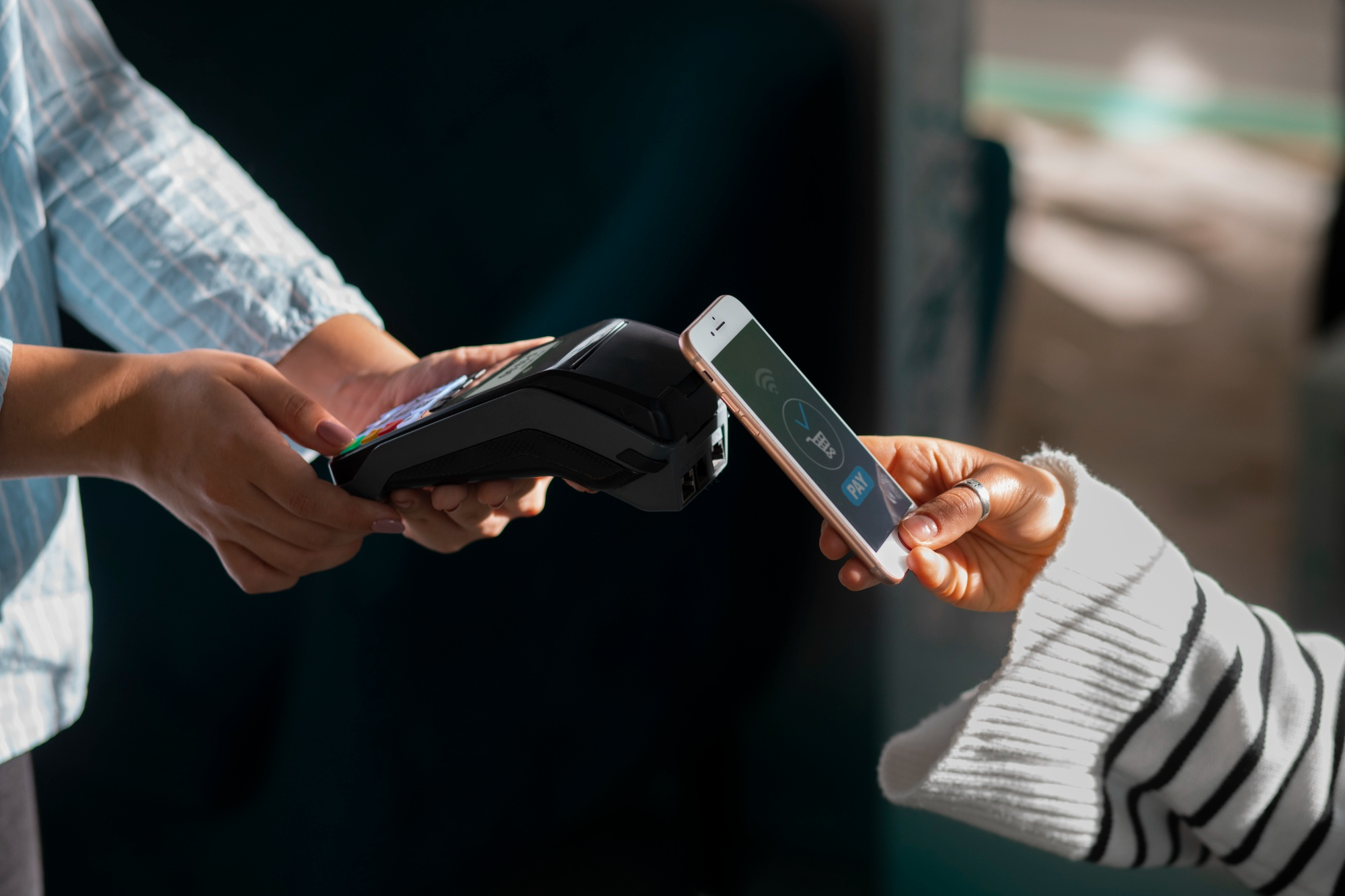
Tap-to-pay options are compatible with phones and certain wearables. All the customer has to do is tap the digital reading device when the stall operator prompts them to do so, then a transaction can be made, provided that there are enough funds in the customer’s digital account.
Besides the hygienic perks of this type of transaction, contactless options are also popular for their quick nature.
Customers won’t linger as long fumbling for change in their wallet or their card, as they likely already have a phone in hand and the app readily available. This can help speed up customer turnover, making it easy to rake in more revenue during a busy working day.
3. QR Code Readers
Another contactless payment method that business owners can set up in their mobile business is QR code payments.
Not all customers have a specific app to pay through the contactless method, so having a QR code reader automatically open their favoured app can be a good way to speed up transactions even more.
Furthermore, posting a QR code in your stall’s facade can also make it easier for people next in line to immediately get ready to transact. Your business can also set up the QR code to accept payments in your preferred way, like directing the funds to a business bank account.
In any case, the heightened efficiency offered by QR codes can boost the productivity of your business. This, in turn, makes for a more positive customer experience and a higher net customer turnover.
4. Online Invoicing Software
One of the smartest ways to streamline payments in a mobile business is by adopting online invoicing software. Unlike manual receipts, these digital tools allow you to send and manage invoices through your smartphone or laptop—making it convenient for when you constantly move out and about amidst your operations.
With this software, you can generate an invoice on the spot and send it instantly to your customer’s email or phone. This makes it a fairly secure and private way of letting your customers settle their dues, which can be preferable for them.
Beyond convenience, online invoicing systems can automatically track outstanding payments and integrate with accounting software. Sending a digital invoice also makes your business look more professional and credible, making customers more likely to trust your company over others.
5. Digital Wallet Integration
Lastly, one of the most effective ways to future-proof payments in your mobile business is by offering digital wallet integration.
With more locals shifting away from cash, wallets like Apple Pay, Google Pay, and PayPal are quickly becoming top customer picks.
For business owners, digital wallet payments are not only convenient but also secure. Transactions are encrypted, reducing the risk of fraud compared to handling cash.
Overall, adopting these digital wallets can also make payments easier for some shoppers, especially tech-savvy ones, which can be beneficial if your business targets this particular demographic.

